

Key Takeaways
- A home bar should be planned around what happens after dinner, not around where a wine fridge or wine rack happens to fit.
- A home bar does not have to look like a traditional bar. A dining-room sideboard, butler’s pantry, transition cabinet, or living-room wine corner can serve the same purpose.
- Wine, glassware, opening tools, and usable counter space should be organized so a complete drink-serving task can happen in one area.
- The wine fridge should support the home bar rather than become its visual center.
- Everyday dinners matter more than occasional large gatherings. Design for frequent use first, then build in flexibility for entertaining.
- In a small space, the goal is not to shrink a traditional bar. It is to remove low-use features and keep only what supports real routines.
When planning a home bar, many homeowners start with the visible elements: wine racks, countertops, a wine fridge, and glassware storage. But what determines whether the space actually gets used is not how complete the setup looks. It is how naturally the bar fits into the way the household already moves through the evening.
Dinner ends, but the evening rarely does. Someone may want to open another bottle, bring out dessert, or move from the dining table to the living room and keep talking. If getting another drink still means returning to the kitchen, searching for glasses, and clearing counter space, the home bar is functioning more as extra storage than as part of daily life.
A well-integrated home bar should support the space between the kitchen, dining room, and living area. Wine is selected there, glasses are within reach, and the shift from dinner to a more relaxed part of the evening can happen without interrupting the flow of the home.

Start With What Happens After Dinner
The most useful way to decide where a home bar belongs is to look at what people actually do once dinner ends.
If everyone tends to stay around the table, wine and glassware should remain close to the dining area. If the household usually moves into the living room, the bar may work better between the dining and living spaces. If dinner often involves several guests, additional bottles, glassware, dessert, water, and serving pieces, a butler’s pantry may handle the load more effectively than a simple sideboard.
The basic sequence is straightforward:
Dinner Table → Choose a Bottle → Open and Pour → Move to the Next Space
The best location for a home bar is usually somewhere along that sequence.
That is why “closest to the kitchen” is not automatically the right answer. A bar may sit only a few steps from the kitchen but still force people to cross the cooking zone, circle an island, or compete with cleanup. Another location may be slightly farther away but fall directly between the dining room and living room, making it much easier to use after dinner.
The same principle matters when deciding where to place a wine fridge within the broader dining and entertaining space.
A Home Bar Does Not Have to Look Like a Traditional Bar
Think of a home bar as a set of functions rather than a piece of furniture.
A full counter, bar stools, open wine racks, and an entire wall of bottles may suit some homes. But most households regularly need only a few things: storage for bottles that will actually be opened, appropriate refrigeration for wines that need it, accessible glassware and tools, and enough counter space to open and pour a bottle.
That means a dining-room sideboard, a run of built-in cabinetry, a section of a butler’s pantry, or a low cabinet along a living-room wall can all function as a home bar.
Once the bar is treated as a function rather than a visual category, planning becomes more disciplined. There is no need to add a sink, bar stools, or extensive bottle displays simply to make the space “feel like a bar.” Those features make sense only if the household will use them often enough to justify the space they occupy.

Four Home Bar Formats That Fit More Naturally Into Everyday Living
Dining Room Sideboard Bar: Directly Supporting Dinner
A sideboard bar works best in homes where the dining room remains the center of activity after the meal. Its main advantage is not simply its compact footprint. It keeps glasses, openers, decanters, frequently used bottles, and serving space close to the table.
The countertop should remain functional rather than becoming a permanent display surface. Everyday glassware belongs in the most accessible storage, while backup pieces can sit behind closed doors. Wines that need refrigeration can be stored in an undercounter unit integrated into the cabinetry.
For a dining-room home bar, the goal is not to imitate a commercial bar. It is to let the dining area handle after-dinner wine service without sending everyone back into the kitchen.
Kitchen-to-Dining Transition Bar: Using the Space Between Rooms
Open-plan kitchens often contain a run of cabinetry, a short wall, or a transition area without a clearly defined role. These spaces can work especially well as a home bar.
The bar should remain close to dining activity while staying outside the main cooking zone. Ideally, someone getting a bottle should not need to stand beside the sink, range, dishwasher, or primary prep surface. During a small dinner gathering, this allows the cook to finish cleaning up while others pour drinks without competing for the same space.
or homes without a separate bar room, a transition bar can be more practical than adding a conventional bar somewhere else. It makes use of the existing relationship between rooms rather than creating a new space that may be used only occasionally.
Butler’s Pantry Bar: Moving Storage and Service Out of the Main Room
A butler’s pantry is well suited to a higher-capacity wine and serving setup because it can connect the kitchen and dining room while keeping backup bottles, extra glassware, serving trays, tableware, and refrigeration out of the main visual space.
Its value is practical rather than decorative.
During a larger dinner, extra bottles and glassware do not need to accumulate in the dining room. After the meal, another bottle can be opened and serving items can be reorganized in the pantry without disrupting the table or the kitchen. For homes undergoing a kitchen renovation or custom-cabinetry project, a butler’s pantry bar can also adapt more easily as the wine collection and entertaining habits change.
Living Room Wine Corner: Serving the Part of the Evening That Happens After Dinner
If the household spends most evenings in the living room, there is no rule that the home bar must stay attached to the kitchen.
A wine corner in the living room, or between the dining and living areas, can place drinks closer to where people actually spend time after dinner. This can work particularly well for households that watch movies, listen to music, read, or sit by the fireplace with a glass of wine.
The setup does not need a sink or extensive prep capacity. A usable counter, everyday glassware, frequently opened bottles, and appropriate refrigerated storage may be enough.
Unlike an entertainment bar designed primarily for parties, this kind of arrangement is built around reducing unnecessary trips back to the kitchen and making wine service a natural part of the living room.
A Good Home Bar Should Support One Complete Serving Task
A simple way to evaluate a home bar is to count how many steps it takes to go from deciding to have another drink to actually pouring it.
If the wine is in one place, the glasses in another, the opener in a kitchen drawer, and the countertop covered with decorative objects, the home may contain all the right components without having a functional system.
A well-planned bar concentrates four things in one area:
- wine
- glassware
- tools
- working surface
A similar task-based principle appears in University of Missouri Extension guidance on kitchen work centers, which organizes related kitchen activities into functional work areas rather than treating each element in isolation.
Openers, bottle stoppers, and frequently used decanters should be stored near the working area. Everyday glasses should be easier to reach than specialty pieces. Bottles likely to be opened soon should sit closer than long-term collection bottles. The counter should be able to hold a bottle, several glasses, and the basic opening setup without requiring something else to be moved first.
Efficiency in a home bar is not about having more storage. It is about reducing the number of steps required to complete a common task.
Organize Glassware and Bottles by Frequency of Use, Not Just Category
Home bars are often organized for display: red wine glasses in one section, white wine glasses in another, Champagne glasses in another, and bottles grouped by style or region. That may look orderly, but household use is rarely evenly distributed.
A more useful system separates active storage from reserve storage.
The glasses, opening tools, and bottles used most often should occupy the easiest-to-reach areas. Extra guest glasses, specialty stems, and bottles not intended for near-term drinking can move into secondary storage.
The same principle applies to the wine collection itself.
A home bar does not need to hold every bottle a household owns. For a larger collection, it can maintain an active rotation for upcoming dinners and weekends, while a larger wine fridge or separate storage area handles longer-term bottles.
For a collection that includes reds, whites, and sparkling wines, understanding how to use a dual-zone wine fridge can also make that active rotation easier to organize.
This keeps the home bar from becoming overloaded and prevents the counter and cabinetry from being consumed by bottles that rarely move.
The Wine Fridge Should Support the Home Bar, Not Define It
A wine fridge has a simple role in a home bar: keeping temperature-controlled storage close to where wine is actually served. The form of the appliance should follow the role of the space, not the other way around.
An undercounter or built-in wine fridge works naturally in dining-room cabinetry, transition bars, and butler’s pantries because refrigeration can sit directly below the service surface without taking away working space. A panel-ready model may suit a custom-cabinetry project where visual continuity matters and the appliance is intended to follow the rhythm of the surrounding millwork. A tall wine fridge may be more appropriate when the bar also serves as the primary storage area for a substantially larger collection.
The key distinction is whether the home bar functions mainly as an everyday serving station or as a primary wine-storage zone.
Capacity, format, and installation style should follow that decision. Buying the appliance first and trying to design the rest of the bar around it reverses the planning process.
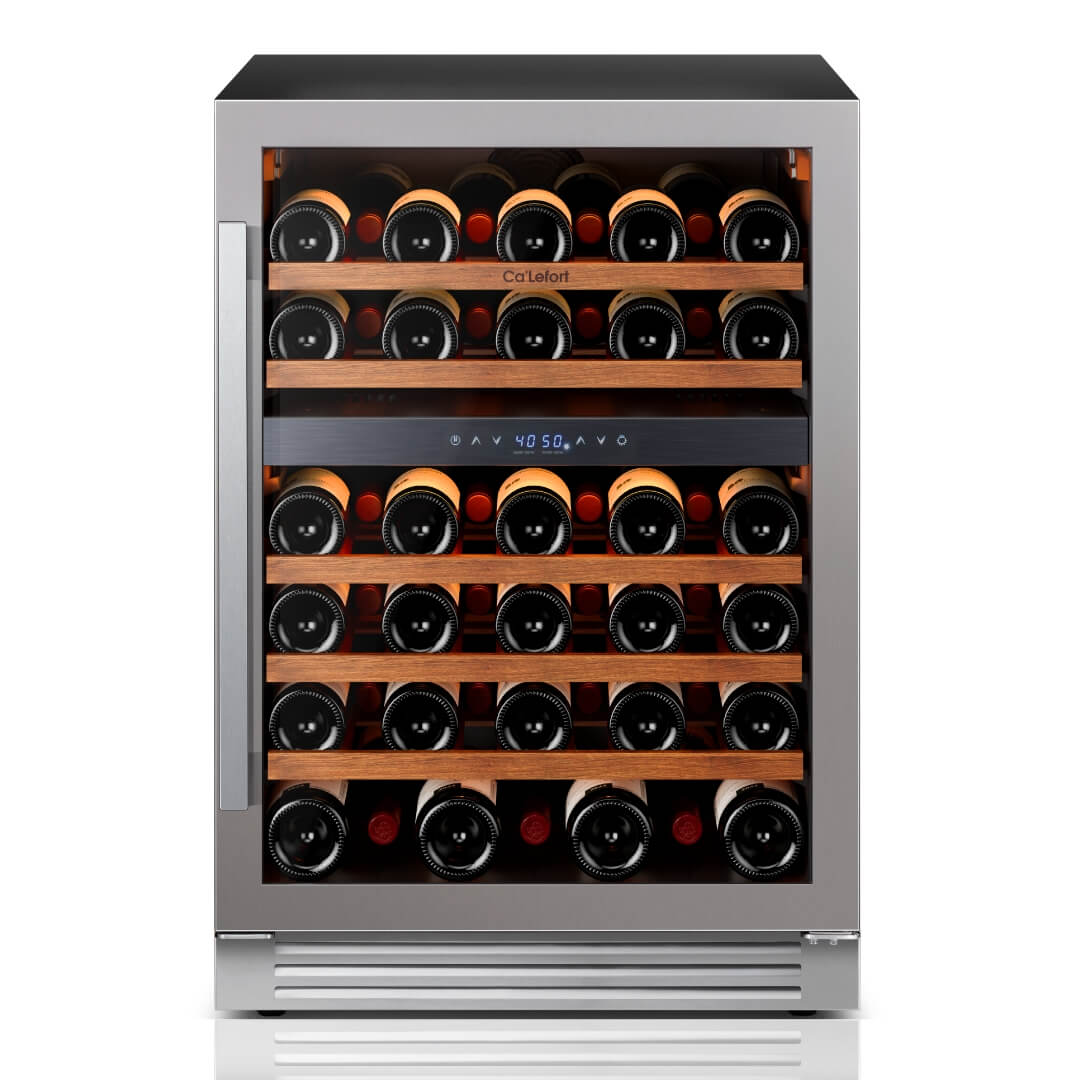
Ca'Lefort 24 inch Dual Zone Wine Fridge
The Countertop Is a Work Surface, Not Just a Display Surface
Many home bars photograph well but become awkward in everyday use because the countertop is already occupied by bottles, flowers, lamps, coffee equipment, and decorative objects.
A home bar counter still needs to function as a work surface.
Opening a bottle requires room for the bottle and tools. Pouring for several people requires space for multiple glasses. Entertaining may add a decanter, ice bucket, dessert, or serving tray. If those tasks require moving decorative objects every time, too much of the counter has been given over to permanent display.
A more practical approach is to limit what stays on the counter, move frequently used tools into nearby drawers or cabinets, and preserve a clear, continuous working area.
The bar does not need to look full to feel finished. It simply needs to be ready to use without preparation.

Whether You Need Bar Stools Depends on Whether It Is a Service Bar or a Stay Bar
Not every home bar needs seating.
For planning purposes, it helps to distinguish between a service bar and a stay bar.
A service bar exists mainly for selecting, opening, and pouring drinks before people return to the dining room, living room, or patio. It does not need extra counter depth or permanent seating.
A stay bar is different. People are expected to drink, talk, and spend time there. That requires sufficient counter depth, legroom, appropriate lighting, and enough clearance around stools or chairs.
Problems arise when the two approaches are mixed. A narrow transition bar may work very well as a service zone, but adding three or four stools can create a circulation problem without providing a genuinely comfortable place to sit.
Defining the role first prevents low-use features from consuming valuable space.
Lighting Should Support Both Use and Atmosphere
Home bar lighting needs to do two things: make it easy to open bottles, read labels, and handle glassware while still feeling appropriate after dinner.
Ambient light alone can leave the counter too dim. Bright task lighting alone can make the bar feel like another kitchen workstation.
A layered approach works better. Under-cabinet or localized task lighting can illuminate the work surface, interior cabinet lighting can help with storage and limited display, and the surrounding ambient light can remain consistent with the dining or living room.
The objective is not to turn bottles into illuminated display objects. It is to keep the bar functional without creating a visual break in the evening environment.
This matters especially when the bar opens directly into a living room, where lighting that feels overly bright or cool can seem disconnected from the rest of the space.
Weeknight Dinners Are a Better Test Than Large Parties
The real test of a home bar is not a six-person dinner party. It is an ordinary weeknight for two.
A typical weeknight may involve one bottle, two or three glasses, and very little counter space. If even that requires opening several cabinets, walking into another room, or clearing a crowded surface, the bar can quickly become inconvenient.
Weekend entertaining may require more bottles, backup glassware, and serving space, but those needs can be supported through reserve storage and temporary staging. The entire bar does not need to be permanently designed around its maximum possible guest count.
| Use | Weeknight Dinner | Weekend Gathering |
|---|---|---|
| Typical number of people | 1–2 | 4–6 |
| Wine | Usually 1–2 bottles | Several options |
| Glassware | Everyday stems | Everyday + backup glassware |
| Counter needs | Opening and pouring | Opening, pouring, snacks, trays |
| Storage priority | Active rotation | Active + reserve |
| Seating | Usually unnecessary | Depends on whether it is a stay bar |
| Main goal | Reduce unnecessary steps | Keep guests out of the kitchen |
A useful principle is simple: design first for the way the bar will be used most often, then build in flexibility for entertaining.
That is what keeps a home bar from becoming a space that comes alive only during holidays and parties.
Small-Space Home Bars Should Remove Functions, Not Shrink Everything
In a smaller home, the problem often is not a complete lack of room for a home bar. It is trying to fit every feature of a large traditional bar into a much smaller footprint.
A compact home bar should start by removing low-frequency functions.
A dedicated sink, fixed stools, extensive open bottle storage, a full back bar, and large display areas are not essential. A usable counter, everyday glassware, basic tools, a small active bottle selection, and suitable wine refrigeration can already cover most everyday needs.
A dining-room sideboard can become a bar. A narrow run of cabinetry between the kitchen and dining area can become a transition station. A recess in the living room can become a wine corner.
The goal is not to make every element smaller. It is to concentrate the functions that actually matter.
Real Integration Is About Following the Design Logic of the Room
Whether a home bar feels integrated depends less on whether the appliance disappears and more on whether the cabinetry, materials, proportions, and lighting make sense together.
That move toward integrated, purpose-specific storage is also visible in the 2026 U.S. Houzz Kitchen Trends Study, which highlights built-in pantries, dedicated beverage stations, and storage planned around the way homeowners use the kitchen every day.
In a dining room built around warm wood and low-profile furniture, a highly reflective appliance with mismatched proportions may look more intrusive than a visible unit that aligns cleanly with the cabinetry. In a custom millwork project, a panel-ready wine fridge can help preserve cabinet rhythm and material continuity. In a more relaxed living-room wine corner, the wine fridge can remain visible as long as its dimensions and placement feel intentional.
Integration does not mean hiding every appliance.
It means the equipment feels like a natural part of the room rather than something added after the space was already finished.
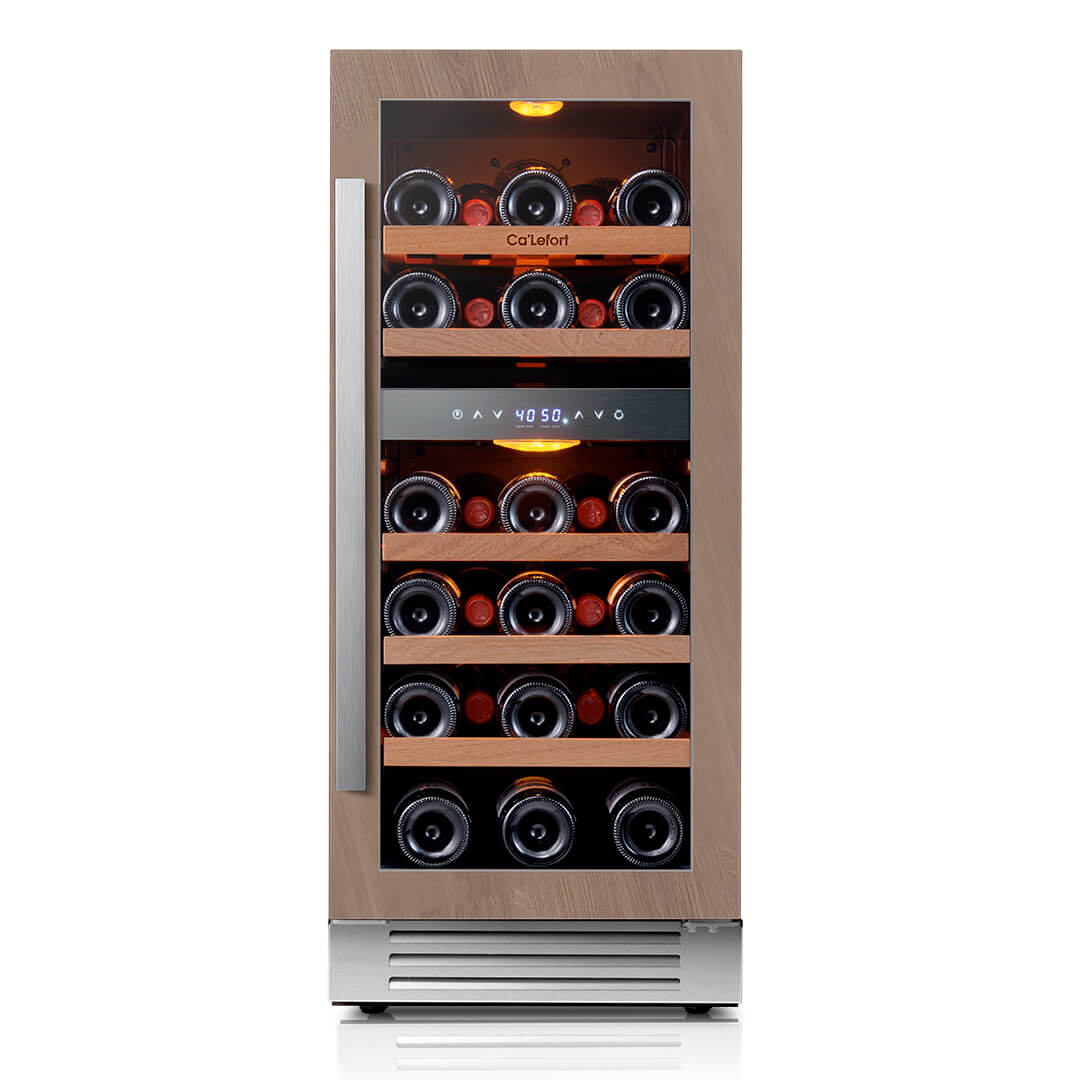
15-Inch Panel Ready Wine Fridge
Conclusion: A Mature Home Bar Should Still Matter When No Guests Are Coming Over
If a home bar only becomes useful during large gatherings, it functions more like an entertainment feature than part of everyday household life.
A better design supports both scales.
On a quiet weeknight, two people should be able to reach for a bottle, pour a glass, and move into the living room without turning the process into another kitchen task. On a weekend with friends, the same space should be able to handle more glassware, additional bottles, and temporary serving needs.
The home bar does not need to replace the kitchen, and it does not need to dominate the room. It simply needs to organize the few actions that happen repeatedly after dinner.
Ultimately, the question is not where a household should “store the wine.” It is how to reduce the interruption between the kitchen, dining room, and the rest of the evening.
When wine is stored where it is needed, glassware and tools are nearby, the counter is ready to use, and people can move naturally into the next part of the night, the home bar stops feeling like a dedicated display area.

Frequently Asked Questions
1. Can a freestanding wine fridge be installed inside home bar cabinetry?
Not automatically. A refrigerator should only be enclosed in cabinetry if its installation design and manufacturer requirements allow it. Built-in models are specifically designed for integrated applications, while some freestanding units require additional surrounding ventilation. Always check the installation specifications before planning the cabinet opening.
2. Should a home bar have a wine fridge or a beverage fridge?
It depends on what the refrigerated space is expected to hold. A wine fridge is designed around wine storage and bottle organization, while a beverage refrigerator is generally better suited to a broader mix of packaged drinks. A home bar that regularly needs both may benefit from separate storage or a combination configuration rather than asking one compartment to handle every category.
3. How do you keep a home bar from looking cluttered?
Keep frequently used items accessible but limit permanent countertop display. Closed cabinetry works well for backup glassware, tools, and less frequently used items, while the countertop should retain enough clear space for actual serving. Visual simplicity is most effective when it follows the storage hierarchy rather than hiding everything equally.
4. Can you create a home bar without remodeling the room?
Yes. A home bar does not require a dedicated room or a full built-in installation. An existing sideboard, cabinet niche, alcove, or short run of cabinetry can become a functional bar if it provides accessible storage and a usable serving surface. The important question is whether the location supports how the surrounding room is actually used.
5. What is the difference between a wet bar and a dry bar?
A wet bar includes a sink with running water, while a dry bar does not. That difference affects more than terminology: a wet bar requires plumbing and is better suited to more independent preparation and cleanup, while a dry bar can often be created with cabinetry, counter space, storage, and refrigeration alone.


