

Key Takeaways
- Count the people who will actually drink wine, hosts included, rather than the total number of seats at the table.
- A 750 mL bottle gives you exactly five 150 mL pours. Change the pour size and the bottle count changes with it.
- Work out expected use and backup bottles separately. Backup wine can stay unopened.
- Put welcome drinks, dinner wine, and any after-dinner wine into one overall estimate instead of giving each stage its own full allowance.
- Settle the total quantity first, then divide it among red, white, and sparkling wine according to what your guests enjoy.
- Backup wine still needs to be ready to serve. A white or sparkling bottle you might open during dinner should already be chilled.

The menu is settled, you can picture the table, and then you reach the wine aisle. Are three bottles enough for six people? Should you add something sparkling? And what happens if everyone reaches for red and the white sits untouched?
The arithmetic is the easy part. Guessing is harder. One guest drinks wine only with dinner, another would rather have a beer, and someone else switches to sparkling water after the welcome drink. “Half a bottle per person” is convenient, but it misses all of that.
A better place to start is with the wine you expect to serve. Divide that amount among the styles your guests actually enjoy, then keep an unopened bottle in reserve if it makes sense for the gathering. The calculations below help you work through those decisions so that, once dinner begins, you can stay at the table.
A quick note on the numbers: the quantities in this guide are buying and serving estimates. They are not recommended amounts to drink or safe drinking limits. Respect each guest’s choices, offer water and appealing nonalcoholic drinks, and consider transportation arrangements ahead of time. Guests who will be driving should avoid alcohol.
Quick Reference: How Many Bottles for 4–10 People?
The table assumes everyone counted will drink wine. It uses standard 750 mL bottles and 150 mL pours, about 5 US fl oz, and compares two scenarios: one pour per person and two pours per person.
These are calculation examples, not predictions of what your guests will drink.
| People Who Will Drink Wine | Bottles Needed for One Pour Each | Bottles Needed for Two Pours Each | Total With One Unopened Backup Bottle |
|---|---|---|---|
| 4 people | 1 bottle | 2 bottles | 2–3 bottles |
| 6 people | 2 bottles | 3 bottles | 3–4 bottles |
| 8 people | 2 bottles | 4 bottles | 3–5 bottles |
| 10 people | 2 bottles | 4 bottles | 3–5 bottles |
All bottle counts are rounded up. Six wine drinkers with two 150 mL pours each need 1,800 mL, or 2.4 bottles, so the planned quantity is three bottles. If you also want a full bottle held back in reserve, prepare four, because three bottles cannot cover both parts of that plan.
A backup bottle is a planning option rather than a rule. For four people with clear preferences, two bottles may be plenty. There is no reason to buy a third simply to satisfy a formula. If some guests drink only red and others only white, check each style on its own because the combined volume can hide a shortfall.
And if eight people are coming but only five will drink wine, plan for five. A smaller quantity that reflects your guests is more useful than an arbitrary assortment of four or six bottles.
Start With Who Will Drink Wine
A Brief Question Is More Useful Than Guessing
You do not need to ask anyone how many glasses they plan to have. A simple message works: “We’ll have red, white, and some nonalcoholic drinks with dinner. Any preferences?” It tells you how many people to plan for and which styles to consider, while giving guests an easy way to say they do not drink.
Count yourself and any co-hosts, too. Then separate the people who drink alcohol from the people who plan to drink wine. A beer drinker may never switch, while someone having one small welcome pour does not need a full evening’s allowance. Those differences can be reflected in your serving estimate.
Confirm Whether Guest-Brought Wine Is for Dinner
A bottle a guest brings is often a gift rather than part of the evening’s wine plan. It may need chilling, or they may want you to enjoy it another day. Count it toward your total only if you have agreed to open it that night and know its general style and volume.
If a guest offers to bring a bottle of white for the first course, adjust your shopping. If they only say they will “bring something,” leave your estimate as it is for now. That way, you are not relying on an unknown bottle or feeling obliged to open a gift on the spot.
How Many Glasses Are in a Bottle of Wine?
This guide uses a 150 mL pour because the math is simple: 750 ÷ 150 = 5, so a standard bottle yields five pours. That is close to the common 5 US fl oz serving, about 148 mL, though the two measurements are not identical.
A serving size and a “standard drink” are different things. The National Institute on Alcohol Abuse and Alcoholism defines about 5 fl oz of 12% ABV wine as one US standard drink, containing roughly 14 grams of pure alcohol. That measures alcohol content. It does not suggest how much you should pour, and higher-alcohol wines contain more alcohol in the same volume. NIAAA: What Is a Standard Drink?
For buying, consistency matters most. At 125 mL per pour, a bottle gives you six servings. At 150 mL, five. At 175 mL, four full servings with 50 mL left in the bottle. A large glass does not call for a larger pour, though a wide bowl can make it easy to underestimate how much you have added.
Before dinner, measure water into one of the glasses you plan to use and see where it lands. You will not measure every pour at the table. This simply gives you a visual reference so a 150 mL plan does not quietly turn into something much larger.
For small sparkling-wine welcome pours, dessert wines, or fortified wines, calculate with the amount you actually plan to serve. A tasting-size pour does not need to count as a full glass.
A Simple Formula for Your Dinner Party
The most flexible calculation is:
Bottles needed = total wine expected to be served in mL ÷ 750, rounded up.
If pour sizes are consistent, you can also use:
Bottles needed = number of wine drinkers × expected pours per person × pour size in mL ÷ 750, rounded up.
An average works well for a quick estimate. When preferences differ, adding up individual servings is more precise.
Say five people at a six-person dinner will drink wine. Three of them are expected to have two 150 mL pours and two will have one. That makes eight pours, or 1,200 mL, which requires two bottles. Add one unopened backup and the total becomes three.
This is why “Are three bottles enough for six people?” has no single answer. If five wine drinkers are expected to share eight pours, three bottles leave a comfortable reserve. If six drinkers are expected to have twelve pours, those same three bottles are the planned serving quantity.

Check Each Wine Style After Calculating the Total
Suppose three guests drink only red and two drink only white, with two pours planned for each. Red comes to 900 mL, which means two bottles. White comes to 600 mL, which means one.
Together, that is only 1,500 mL, the volume of two bottles. But those preferences still call for three bottles because the remaining wine from one style cannot cover demand for the other.
Work out the total first, then check each style individually. Rounding up each style already creates some flexibility, so you usually do not need to add a backup bottle of every kind.
What Changes the Amount of Wine You Need?
Serving Occasions Matter More Than Hours
A three-hour dinner does not require adding wine for every hour. What matters is when wine will be offered: on arrival, with the meal, or afterward.
If you serve something else before dinner and bring out wine with the main course, the plan stays fairly focused. If wine appears at both the welcome and dinner stages, include both in the same calculation.
Sparkling wine is an easy place to overestimate. You may plan enough red and white for the evening, then add a separate welcome round on top. Unless that round truly represents additional demand, count it within the overall wine estimate.
Other Drinks Matter Only If Guests Choose Them
Beer or cocktails can lower wine demand, but there is no need to apply an arbitrary percentage. If most guests prefer wine and a few beers happen to be in the fridge, demand may barely change. If several guests have already chosen something else, adjust the number of wine drinkers or servings accordingly.
Offer nonalcoholic drinks from the start. Sparkling water, an alcohol-free sparkling drink, or tea can sit alongside still water as real choices rather than something found only after a guest declines wine. If someone needs to avoid alcohol entirely, check the label instead of relying on the product name.
Let the Menu Guide Wine Styles, Not the Number of Changes
Fall menus often include roasted poultry, root vegetables, mushrooms, and slow-cooked dishes. A generous spread of sides does not mean every dish needs its own wine. Start with the main course and its dominant sauce, then consider whether anything on the menu moves in a very different direction.
Roast chicken, mushrooms, and potatoes may work with a single wine from start to finish. A delicate seafood starter followed by a rich beef stew gives you more reason to offer two styles.
Even then, guests can stay with the wine they enjoy. There is no need to change glasses every time a new course arrives.
Putting the Numbers Into Practice: Dinners for 4, 6, 8, and 10
Four People: Decide Whether You Need a Second Style
For a four-person dinner, start with one main wine. If everyone’s tastes are similar, two bottles of the same wine are easier to plan around than two unrelated choices. At two 150 mL pours per person, the expected volume is 1,200 mL. Two bottles cover that scenario, with the second bottle already included in expected use.
If some guests drink only white and others only red, divide the bottles to match. When both preferences are clear, opening one of each makes sense. Reducing waste is about avoiding bottles with no likely demand, while still giving guests a choice they will enjoy.
Six People: Give Each Bottle a Clear Purpose
First, confirm how many people will actually drink wine. If five are expected to share ten 150 mL pours, two bottles meet the estimate and a third can stay in reserve. If all six will have two pours, you need three bottles for the planned quantity.
The selection does not have to follow a tidy “one red, one white, one sparkling” formula. If you are skipping a sparkling welcome and most guests prefer red, two bottles of the main red plus one white may serve the table better. Each bottle should answer a likely preference rather than simply make the shopping list look complete.
Eight People: Give the Main Wine Enough Capacity
Eight wine drinkers at two 150 mL pours each need 2,400 mL, which rounds up to four bottles. Depending on the menu, that could be two bottles of the main wine, one of a contrasting style, and a fourth chosen according to likely demand. Four bottles do not have to mean four different wines.
One 750 mL bottle gives only five 150 mL pours, so it cannot provide a full glass for all eight guests. As the group grows, adding enough of the main wine often matters more than adding more labels.
Ten People: Plan the Refill Sequence
Ten seats do not always mean ten wine drinkers. If six will have wine, plan for six. If all ten will drink wine and you use the two-pour scenario, the total comes to 3,000 mL, exactly four bottles. One unopened backup brings the total to five.
With a larger group, decide ahead of time which bottle opens first, which matching bottle follows it, and which one stays in reserve unless demand shifts. Once the main course arrives, the next choice should already be easy.
A useful backup bottle is usually one that fits the table’s main preferences rather than an unusual style only one person is interested in trying.
How Should You Divide Red, White, and Sparkling Wine?
Let your guests’ preferences set the direction, then use the menu to refine it. Fall does not automatically mean mostly red. Even with roasted meat on the table, there is little reason to buy a large amount of red if most guests would rather drink white.
Once you have chosen the main wine, consider whether anyone’s preferences are still unaddressed. If the main wine is a full-bodied red, a fresher, lighter option can offer a useful contrast. If everyone enjoys the same style, there is no need to add more simply for variety.
For sparkling wine, get specific about the pour. Six welcome servings of 100 mL need 600 mL, so one 750 mL bottle covers the round. Eight servings need 800 mL, so one bottle falls short. “One bottle for the toast” is only a useful estimate when you know both the number of guests and the serving size.
Once the welcome quantity is settled, plan the rest for dinner. If a guest wants to stay with sparkling through the meal, include that in the estimate rather than assuming everyone will move to red or white.

Which Wines Should Be Chilled Ahead?
Backup Wine Can Stay Sealed, but It Should Be Ready
If you might need a second bottle of white during dinner, chill it in advance. Waiting until the first bottle is empty leaves you with wine in the house that still needs time before it is ready to serve.
Think of the evening’s likely bottles separately from the rest of your collection. If you host often, it can help to organize your wine fridge around near-term bottles so likely choices are easy to identify and reach. Long-term bottles can stay where they belong.
Chilling a backup bottle simply means it is ready if needed. It can still remain unopened at the end of the evening.
Prepare for the Wine, Not Just Its Color
Sparkling wine, crisp whites, fuller-bodied whites, and reds have different serving needs. WSET’s guide to the ideal serving temperature for each wine style notes that a full-bodied white such as an oaked Chardonnay may need only light chilling at around 50–55°F, while full-bodied reds served above 64°F can lose freshness and blur their flavor structure. Producer guidance and the conditions in your home should still shape the final adjustment.
A newly added bottle also needs time to cool. The appliance display shows the set temperature, not the temperature the wine has already reached. Put likely dinner bottles in place ahead of time rather than loading them shortly before guests arrive.
A Wine Fridge Helps Keep the Next Bottle Ready
For households that regularly serve both red and white wine, a Ca’Lefort dual-zone wine fridge can keep different styles organized around their temperature needs and within easy reach. Set each zone according to the model’s range and the wine you plan to store. Bottles that need a lower serving temperature may still benefit from additional chilling before they reach the table.
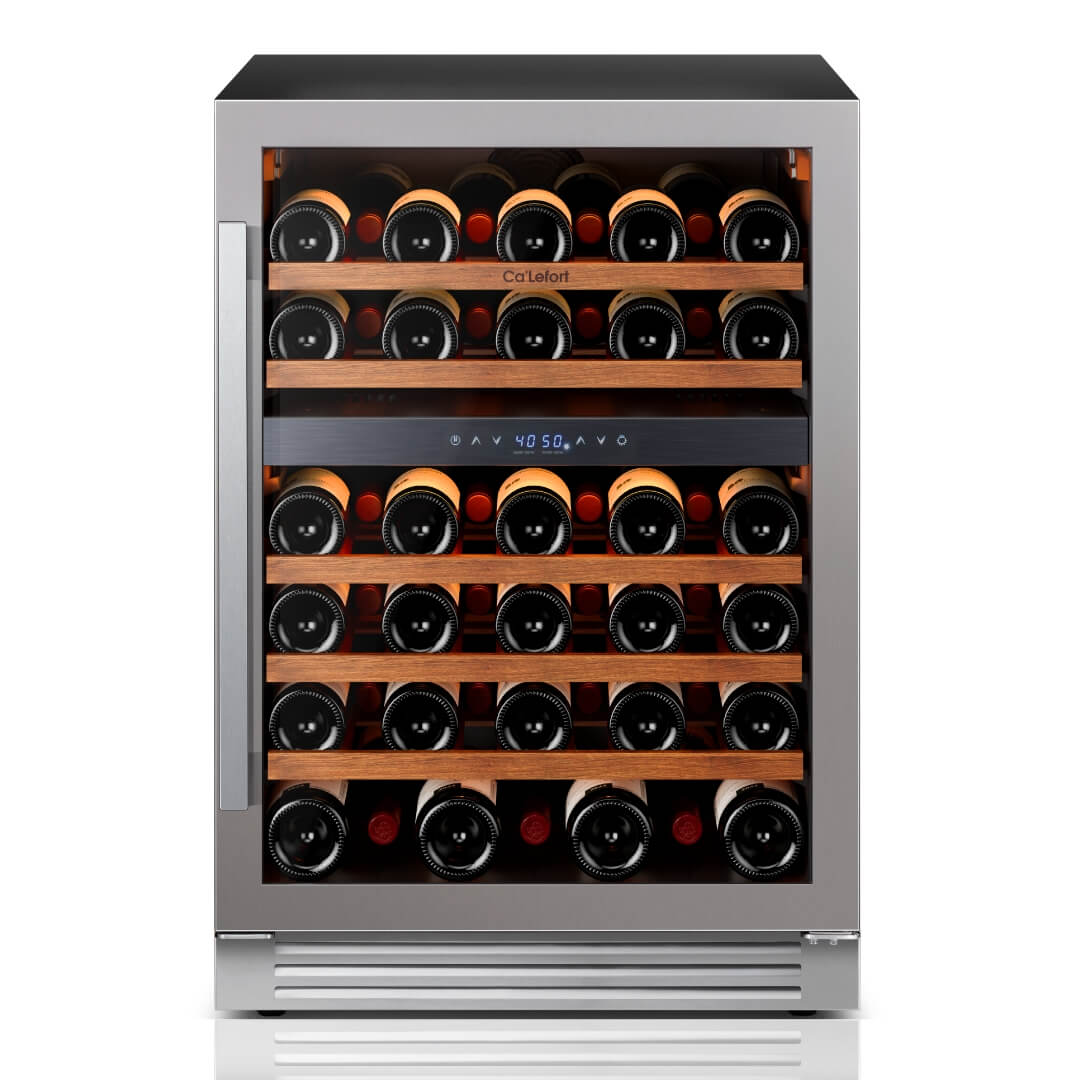
Ca'Lefort 24 inch Dual Zone Wine Fridge
For one small dinner, the setup can stay simple. Know which bottles are for the evening, which comes first, and which stays in reserve. A household refrigerator and an ice bucket can also handle occasional gatherings.
A dedicated wine fridge becomes more useful when storing wine and keeping separate drink space are part of the household’s regular routine.

When Should You Open the Wine?
The Day Before: Confirm Quantities and Assign Each Bottle a Role
Confirm how many guests plan to drink wine, what they prefer, and how much you expect to serve. Check what you already own before shopping, and include any guest contribution that has been confirmed.
This is also the time to catch an imbalance. One bottle of the main wine alongside three alternatives leaves little of what most guests will reach for.
Set out glasses, a corkscrew, suitable stoppers, and nonalcoholic drinks. Choose a serving spot that stays clear of food preparation. The more decisions you make now, the less you need to think about once guests arrive.
Before Guests Arrive: Prepare the First Stage
Use the 60–90 minutes before arrival to check the welcome drinks, wine temperatures, and tools. Whether a particular wine should be opened early or decanted depends on the bottle and any producer guidance.
If you are serving one wine on arrival, prepare that one first. If guests have already chosen both red and white, have a bottle of each ready.
There is little benefit in opening several extra bottles in advance. Keep the rest ready and let the evening tell you what comes next.
During Dinner: Ask Before Opening the Next Bottle
As a bottle runs low, ask whether anyone would like more and whether they prefer the same wine or something different. An empty glass is not automatically a request for a refill.
If several people want more of the main wine, open the next matching bottle. If one guest wants a small additional pour, let them know what is already available and allow them to choose.
That keeps service relaxed and makes it less likely that the evening ends with several barely touched bottles.
After Dinner: Put Wine Away and Note What You Learned
Reseal opened still wines you are no longer serving and refrigerate them, then adjust the temperature before enjoying them again. Use a suitable sparkling-wine stopper for sparkling bottles.
For more detail, this guide explains how long opened wine lasts across red, white, and sparkling styles. The exact window depends on the wine, how much remains, and how it is stored.
Return unopened bottles to appropriate storage. Then note what actually happened: how many bottles you opened, which styles went first, and which drinks barely moved. It takes two minutes, and it tells you more about the next gathering than remembering that eight people came.
A Final Six-Point Wine Checklist
- Have you counted the people who will actually drink wine, including the hosts?
- Are welcome wine and dinner wine included in the same overall estimate?
- After checking each style separately, do you have enough of the main wine, and do the alternatives reflect real preferences?
- Which bottles are part of expected use, and which can stay unopened as backup?
- Are the wines you might serve at the right temperature, with the necessary tools close at hand?
- Have you planned for water, nonalcoholic drinks, and transportation home?
A Well-Prepared Table Leaves Room for Choice
You cannot know exactly what everyone will drink at a fall dinner party, but you can prepare what is within your control: count the people who plan to drink wine, keep the pour size consistent, divide the wine by preference, and open bottles as the evening unfolds.
The number on your shopping list is the set of options you have prepared, not a target to finish. The next bottle can stay in the wine fridge. A guest who wants sparkling water can have it right away.
And when the main course reaches the table, you can sit down and enjoy dinner, with no quantities left to calculate and no bottle that suddenly needs chilling.
Frequently Asked Questions
1. How should I calculate wine when some guests do not drink it?
Start with the guests of legal drinking age who actually intend to drink wine, including the hosts. Leave out nondrinkers, designated drivers, and guests who have already chosen beer or cocktails. If someone plans to have only a small toast, count that serving separately using the amount you expect to pour.
2. Should I open all the wine before guests arrive?
Usually, no. Prepare whatever you need for the welcome or first serving stage, then open more as the evening develops.
Some wines may benefit from opening early or decanting, depending on their style, age, and producer guidance. That decision is separate from opening several bottles simply because they are available.
3. Should unopened backup wine be chilled in advance?
For a white or sparkling bottle that might be needed during dinner, yes. Having it at the right temperature means it is ready if the first bottle runs out, while still allowing it to stay sealed if nobody asks for more.
Reds also deserve some thought. Their serving temperature should reflect the wine style and the conditions in your home rather than simply staying wherever the room happens to be warmest.
4. Is water enough as the only nonalcoholic option?
Water should always be available. Adding one more thoughtful choice gives guests who do not drink, or who want to stop during the evening, something beyond a default alternative.
Sparkling water, an alcohol-free sparkling drink, or tea that suits the menu can all work. If a guest needs to avoid alcohol completely, check labels carefully because some products marketed as nonalcoholic may still contain a small amount.
5. Should I split the wine evenly between red and white?
Guest preferences are a better guide than a fixed 50:50 split. Start there, then consider the main dish, its dominant sauce, and when each wine will be served.
If most guests prefer red, buy more of the main red. When preferences are less clear, one broadly appealing main wine and one clearly different alternative usually give the table enough choice.


