

Key Takeaways
- Grenache is not a fixed wine style. Red Grenache, Grenache rosé, and Grenache Blanc each call for a different pairing approach.
- Body, acidity, fruit ripeness, alcohol, and oak influence often matter more than the grape name alone.
- Sauce, seasoning, and cooking method can shape a pairing as much as whether the main ingredient is chicken, beef, fish, or vegetables.
- Fresh, fruit-driven red Grenache works well with roasted poultry, pork, and tomato-based dishes, while fuller styles can stand up to lamb, braised meats, and barbecue.
- Serving temperature should reflect the style of wine. Red, rosé, and white Grenache should not all be served at the same temperature.
A fall dinner might bring roast chicken, lamb, braised beef, mushroom risotto, and roasted vegetables to the same table, and Grenache could plausibly accompany every one of them. That does not mean the same bottle will work equally well with every dish. Some Grenache wines are bright and juicy enough for herb-roasted chicken or tomato-based dishes. Others are ripe and full, with enough weight for slow-cooked lamb or smoky barbecue. Grenache also appears in rosé and white wines, opening the door to seafood, cheese, appetizers, and lighter courses.
That range is part of what makes Grenache so interesting at the table. It also means a simple list of “pair this with that” only goes so far. Before deciding what to eat with Grenache, start by identifying the style in the bottle. Then consider its body, acidity, fruit ripeness, alcohol, and oak influence alongside the sauce, seasoning, and cooking method of the food. Once that process becomes familiar, it is easier to make a thoughtful pairing even when the producer, region, or vintage changes.

First, Identify the Style of Grenache in Your Bottle
What Is the Difference Between Grenache and Garnacha?
Grenache is the name most often associated with France, while Garnacha is the Spanish name. They generally refer to the same grape variety rather than two separate grapes. The name used on the label may reflect the region, language, or producer, but it does not tell you whether the wine will be light, powerful, savory, or fruit-forward.
Most discussions of Grenache refer to the dark-skinned Grenache Noir, known in Spain as Garnacha Tinta. Grenache rosé is usually made from this dark-skinned grape with limited skin contact. Grenache Blanc, however, is a white-skinned mutation within the Grenache family. It is not simply red Grenache vinified like a white wine. According to the Wine & Spirit Education Trust’s overview of Grenache, the family also includes stable white and pinkish-gray mutations that share the same DNA profile.
This distinction gives you a useful starting point. Red, rosé, and white Grenache naturally begin in different places at the table, but color alone does not determine the pairing. Body, acidity, ripeness, and winemaking choices ultimately matter more.
Not Every Red Grenache Is a Heavy Red Wine
Red Grenache is often associated with ripe red fruit, spice, and warmth, but it can be made in a remarkably broad range of styles. WSET describes Grenache as capable of producing relatively pale, fruit-forward red and rosé wines, with tannin levels that vary according to growing conditions and winemaking. The grape can reach high levels of natural sugar, so finished wines are often relatively high in alcohol, although that does not make every Grenache equally rich or heavy.
One bottle may be a fresh, straightforward single-variety wine intended for early drinking. Another may be concentrated, structured, and capable of developing in the bottle. Grenache also commonly appears in GSM blends with Syrah and Mourvèdre, as well as in regional blends with grapes such as Carignan or Tempranillo. Each variety can influence the wine’s color, acidity, tannin, and flavor profile.
Before planning dinner around a red Grenache, check the alcohol level, region, blend, and any available information about aging. Once the bottle is open, pay attention to what is actually in the glass. Is the fruit bright or deeply ripe? Are the tannins gentle or firm? Does the wine retain freshness, or does warmth dominate the finish? Those observations will usually tell you more about the right dish than the word “Grenache” on the front label.
Rosé and Grenache Blanc Also Range from Light to Full
Grenache rosé is not automatically sweet. Many examples are dry, with red-fruit, citrus, floral, or subtle spice notes that work easily with appetizers and lighter entrées. Others have more body and fruit concentration, allowing them to accompany grilled salmon, paella, roasted vegetables, or spiced poultry.
Grenache Blanc also covers more ground than the phrase “crisp white wine” might suggest. Some wines emphasize fresh fruit, herbs, and mineral character, making them natural partners for shellfish, white fish, and olive-oil-based dishes. Others have a broader texture, sometimes shaped by lees contact, barrel fermentation, or oak aging, and can sit comfortably beside creamy sauces, roasted poultry, mushrooms, and richer seafood.
Use Five Factors to Build a Better Grenache Pairing
Food and wine pairing is less about finding one correct answer and more about understanding how the food changes your perception of the wine. Salt, acidity, fat, sweetness, and chile heat can all influence what you notice in the glass. The WSET guide to food and wine pairing also emphasizes personal preference. Even a technically sensible pairing has limited value if you do not enjoy the wine itself.
Match the Intensity of the Wine and the Dish
A light Grenache can vanish beside a long-braised dish, concentrated meat sauce, or heavily smoked food. At the other end of the spectrum, a ripe, high-alcohol red can overwhelm steamed fish or simply dressed vegetables. Rather than relying on “red wine with red meat” or “white wine with fish,” compare the overall weight of the wine with the finished dish.
Take roast chicken. Prepared with lemon, herbs, and olive oil, it can work with Grenache Blanc or a lighter red Grenache. Add a creamy mushroom sauce, and the dish gains enough weight for a fuller Grenache Blanc. Char the skin and season it with smoked paprika, and a ripe red Grenache may feel more natural. The protein has not changed. The dish has.
Use Acidity to Manage Fat and Sauce
Acidity helps refresh the palate between bites of richer food. Pork, roast chicken, salmon, cream sauces, and cheese all contain enough fat that a wine without sufficient freshness can make the pairing feel heavy.
Acidic ingredients deserve just as much attention. Tomato, lemon, vinegar, and tangy dressings can make a softer wine seem flat or overly warm. With tomato-based food, a fresh red Grenache, Grenache rosé, or lively Grenache Blanc will often work better than a broad wine whose acidity is less apparent.
The goal is not to choose the most acidic bottle available. It is simply to keep the dish from making the wine taste dull.
Separate Ripe Fruit from Actual Sweetness
Grenache can smell and taste of ripe strawberry, raspberry, cherry, or darker fruit, but a generous fruit profile does not necessarily mean the wine contains noticeable residual sugar. That distinction becomes important when the dish itself includes sweet ingredients.
Roasted squash, carrots, caramelized onions, or a moderately sweet barbecue sauce can echo the ripe fruit in a red Grenache. If a sauce contains a large amount of sugar, honey, or syrup, however, a dry wine may begin to taste thinner, more acidic, or more bitter. In that case, consider reducing the sweetness of the sauce or choosing a wine with fuller fruit and a rounder texture rather than assuming any Grenache will work.
Watch the Interaction Between Alcohol and Chile Heat
Chile heat behaves differently from the flavors of black pepper, rosemary, thyme, cumin, or smoked paprika. Grenache can work beautifully with aromatic spices and Mediterranean herbs, but a high-alcohol wine paired with a very hot dish may intensify the sensation of heat.
For spicy food, look for a Grenache with clear fruit, moderate alcohol, and relatively gentle tannins, or consider a dry rosé served cool. What matters is not simply whether the recipe contains chile, but how persistent the heat is and whether the wine’s warmth makes it more noticeable.
Pair with the Sauce and Cooking Method
The main ingredient is only the beginning. A steak seasoned with salt and pepper presents a different pairing challenge from one served with a red-wine reduction, creamy peppercorn sauce, or sweet barbecue glaze. Salmon might be lightly roasted with lemon, glazed with miso, smoked, or served with brown butter. Each preparation brings a different level of richness, sweetness, and intensity.
Roasting, grilling, smoking, and braising generally deepen flavor and add char, concentration, or savory character. These cooking methods create more room for ripe, spicy, or full-bodied red Grenache. Steaming, light searing, cold preparations, and citrus-based sauces are more likely to favor rosé or Grenache Blanc. Asking how the dish was prepared often gets you closer to the right bottle than asking what type of meat it contains.
What Foods Pair with Red Grenache?
Fresh, Medium-Bodied Red Grenache
When red Grenache leads with fresh red fruit, moderate structure, and limited oak influence, begin with herb-roasted chicken, pork tenderloin, tomato-braised vegetables, mushrooms, eggplant, or moderately seasoned sausage. These dishes have enough roasted and savory flavor to meet the wine without burying its fruit.
Tomato is especially useful here. Its acidity calls for freshness in the wine, while cooked tomato, roasted pepper, and onion develop a sweetness that connects naturally with Grenache’s red-fruit character. Pizza, tomato-braised beans, vegetable lasagna, and lighter sausage dishes can all work well with an energetic Grenache rather than a heavily oaked red.
Pork is another flexible option, although preparation matters. Herb-roasted pork tenderloin can suit a lighter bottle. Add baked apple, caramelized onion, or a gently sweet pan sauce, and a fruitier, rounder Grenache can create a more natural bridge between the savory meat and sweeter accompaniments.

Ripe, Full-Bodied Red Grenache
When the wine shows greater concentration, riper fruit, and more noticeable warmth, consider roast lamb, braised beef, pulled pork, burgers, barbecue, and smoked meats. Slow cooking concentrates meat juices and seasoning, while grilling adds char and bitterness. The wine needs enough fruit and weight to remain present alongside those flavors.
Lamb is a particularly natural partner. Rosemary, thyme, garlic, and the browned edges of roasted meat can complement the spice, herbs, and ripe fruit found in many Grenache wines. If the lamb is braised with tomato, olives, or root vegetables, look for a wine that combines generous fruit with enough acidity to keep the meal balanced.
Grenache can also work with steak, although not every Grenache is suited to it. A thick, fatty cut with a concentrated sauce usually needs more structure than a light, soft red can provide. A concentrated Grenache or structured Grenache-led blend is the better choice. With burgers, braised beef, or herb-roasted beef, Grenache’s fruit and spice may fit more easily than with a simply seared, heavily marbled steak.
Savory and Spicy Grenache-Led Blends
When Grenache is blended with Syrah, Mourvèdre, Carignan, or another variety, the other grapes may contribute darker fruit, firmer tannins, more acidity, or greater savory depth. These blends can handle more complex dishes such as Provençal stews, rosemary-roasted lamb, tomato-and-olive braises, spice-rubbed pork, and aged hard cheeses.
There is no need to match identical aromas in the wine and food. The more important consideration is whether their intensity feels balanced. Herbs, olives, roasted garlic, and slow-cooked savory flavors can bring focus to the wine’s fruit, while salt and fat may soften the impression of tannin. If the front label emphasizes Grenache, check the back label or producer information before assuming the wine will behave like a single-variety bottling.
What Foods Pair with Grenache Rosé?
Dry, Refreshing Grenache Rosé
A dry Grenache rosé can be an easy first wine of the evening. It does not dominate the palate before dinner, yet it often brings more red-fruit and spice character than a very neutral white. Try it with grilled shrimp, tuna tartare, prosciutto, soft cheese, hummus, tomato appetizers, or a Mediterranean salad.
Rosé is particularly flexible when the table includes olives, cured meat, cheese, fresh vegetables, and small plates. Its acidity can keep salt and fat from feeling heavy, while its fruit works comfortably with tomato, roasted pepper, and fruit-based garnishes. Pay attention to the dressing, though. A salad with plenty of vinegar or lemon needs a wine with enough freshness to stay lively.
Fuller, More Textured Grenache Rosé
A darker or more substantial Grenache rosé can continue into the main course rather than being limited to appetizers. Grilled salmon, paella, spiced chicken, roasted squash, and root vegetables all offer enough flavor to support this style.
With salmon, let the sauce guide the choice. Lemon and herbs suit a fresher rosé, while smoked paprika, roasted tomato, or light charring can accommodate a fruitier, fuller wine. A chilled Grenache rosé may also feel more comfortable with moderately spicy food than a warm, high-alcohol red. Still, color alone does not tell you whether the wine is sweet. Check the producer’s description or taste the wine before deciding how it will interact with the dish.
What Foods Pair with Grenache Blanc?
Fresh Grenache Blanc
Fresh Grenache Blanc can work well with shellfish, grilled white fish, lemon-and-herb chicken, goat cheese, and vegetables dressed with olive oil. Delicate seafood calls for a wine that remains lively without bringing excessive oak or alcohol. Lemon, fennel, herbs, olives, and restrained amounts of nuts can all connect naturally with the wine’s Mediterranean character.
Grenache Blanc also deserves a place at a vegetable-focused table. Roasted zucchini, cauliflower, peppers, and fennel develop sweetness without becoming heavy. Fresh vegetables, nuts, olives, and creamy cheeses are also among the pairing directions presented by the European Garnacha/Grenache wine program. In general, the fresher the wine, the simpler the preparation can remain.
Fuller or Oak-Influenced Grenache Blanc
A more textured Grenache Blanc does not need to stay beside delicate seafood. Roast chicken, turkey, creamy pasta, grilled salmon, mushroom risotto, and roasted cauliflower can all support the extra weight. Lees contact, barrel fermentation, or oak aging may contribute a rounder texture and more savory or spicy complexity, allowing the wine to stand up to cream, butter, mushrooms, and browned poultry.
Even with a full-bodied white, more richness is not always better. If the dish contains a great deal of cream or cheese, the wine still needs enough freshness to keep the combination from feeling heavy. Producer notes can offer useful clues. Descriptions centered on citrus, herbs, freshness, or minerality often point toward seafood and lighter poultry, while references to texture, ripe fruit, lees, or oak suggest richer sauces, mushrooms, and roasted dishes.

Build a Fall Dinner Around Grenache
Understanding the principles does not mean opening five or six bottles for one dinner. A more practical approach is to choose the main course first, then decide whether the evening would benefit from a separate welcome wine or a change of style between courses.
A Simple Weeknight Dinner
For a weeknight meal, serve herb-roasted chicken with carrots or squash and a tomato-and-herb side dish. If the chicken is seasoned with olive oil, garlic, and dried herbs, a fresh, medium-bodied red Grenache can carry the meal from the main course onward. If lemon or a light white-wine sauce plays a larger role, a textured Grenache Blanc may be the better fit.
This menu works because neither side needs to compete for attention. The food has roasted flavor without a highly concentrated sauce, while the wine brings enough fruit and freshness without relying on heavy tannin. Even for two people, one bottle can work comfortably from the first serving to the last.
A Mediterranean-Inspired Dinner with Friends
For a gathering of four to six, begin with olives, cured meat, cheese, hummus, and roasted peppers alongside a dry Grenache rosé. For the main course, serve rosemary-roasted lamb, tomato-braised meat, or chicken with olives, then move to a riper, more structured red Grenache.
This creates a natural rhythm through the meal without placing several wines on the table at once. The rosé handles the salt, vegetables, and lighter fats of the first course, while the red is reserved for meat, browning, and herbs. Guests can experience different expressions of the Grenache family without turning dinner into a formal tasting.
A Vegetable-Focused Fall Menu
Grenache is equally at home at a vegetable-focused table. Roasted squash, mushroom risotto, tomato-braised vegetables, eggplant, and lentil dishes all bring enough texture, umami, and roasted flavor to work with red or white Grenache.
For a dish built around tomato, eggplant, and herbs, choose a fresh red Grenache with enough acidity to remain balanced. If mushrooms, cream, nuts, or roasted cauliflower lead the menu, a textured Grenache Blanc may feel more natural. Plant-based dishes can be approached through the same considerations as any other meal: fat, salt, acidity, intensity, and cooking method.

Quick Grenache Food Pairing Guide
| Food | Grenache Style to Consider | What to Check | Why It Can Work |
|---|---|---|---|
| Herb-roasted chicken | Fresh red Grenache or Grenache Blanc | Lemon, cream, or tomato in the sauce | The sauce determines the weight and acidity needed from the wine |
| Pork tenderloin | Fruit-forward red Grenache | Apple, onion, or sweetness in the sauce | Ripe fruit can bridge savory pork and sweeter accompaniments |
| Lamb | Fuller red Grenache or a Grenache-led blend | Grilling, braising, and herbs | The wine can meet roasted meat, char, and spice |
| Steak | Concentrated Grenache or a structured blend | Cut, fat, doneness, and sauce | Lighter Grenache may not provide enough structure |
| Salmon | Grenache rosé or fuller Grenache Blanc | Grilling, smoking, butter, or citrus | Choose the wine according to the fish’s preparation |
| Shellfish and white fish | Fresh Grenache Blanc or dry rosé | Cream, spice, and cooking method | Freshness matters more than raw power |
| Tomato-based dishes | Fresh red Grenache or dry rosé | Acidity and degree of roasting | The wine needs both freshness and fruit |
| Mushrooms and roasted vegetables | Red or white Grenache | Cream, herbs, and caramelization | The dish’s texture helps determine the better style |
| Cheese | Red, rosé, or white Grenache, depending on the cheese | Salt, fat, firmness, and age | Different cheeses affect acidity and tannin differently |
Use the table as a starting point rather than a replacement for tasting. “Roast chicken with red Grenache” may sound settled until a lemon-butter sauce shifts the advantage toward Grenache Blanc. Add smoked paprika and char, and red Grenache becomes appealing again.
How Serving Temperature Changes a Grenache Pairing
A promising pairing can lose its balance when the wine is served at the wrong temperature. Red Grenache served too warm may show more alcohol and less definition. Served too cold, its aromas may retreat while tannin and bitterness become more noticeable. Rosé and Grenache Blanc can also be overchilled. The first sip may feel refreshing, but the wine’s aroma and texture may not fully emerge until it warms slightly in the glass.
Use the following ranges as practical starting points rather than fixed rules:
| Grenache Style | Suggested Starting Temperature |
|---|---|
| Crisp Grenache rosé | 45–50°F / 7–10°C |
| Fresh Grenache Blanc | 45–50°F / 7–10°C |
| Fuller Grenache Blanc | 50–55°F / 10–13°C |
| Lighter red Grenache | 55–60°F / 13–16°C |
| Fuller red Grenache | 60–65°F / 16–18°C |
Temperature is something you can adjust during the meal. If a red Grenache feels warm and alcohol-forward, cool it briefly and taste it again. If a Grenache Blanc seems closed or overly tight, let it gain a few degrees in the glass.
“Room temperature” can also be misleading in many modern homes. A kitchen at 72°F is considerably warmer than the cellar conditions behind the traditional advice. Wine Folly’s guide to wine serving temperature similarly recommends serving red wine below typical modern room temperature and adjusting according to style.
Decanting should also depend on the bottle in front of you. A young, concentrated red Grenache may become more expressive with some air, while an open, easy-drinking wine may need little more than a swirl in the glass. Mature wines require more care. WSET’s guidance on serving and decanting wine notes that most everyday table wines are unlikely to produce sediment that requires decanting and that there is no standard aeration time that applies to every young wine. Pouring a small taste before deciding is more useful than automatically decanting every Grenache for an hour.
How to Store and Prepare Different Grenache Styles for Dinner
Serving temperature and long-term storage temperature serve different purposes. Long-term storage is primarily about stability, including limiting temperature swings, strong light, and unsuitable environmental conditions. Serving temperature affects how the wine presents its aroma, structure, and texture once opened. Red, rosé, and white Grenache can share a stable storage environment, then move toward different serving temperatures before dinner.
If you usually open one style at a time, a single-zone wine refrigerator followed by a small pre-dinner temperature adjustment may be entirely sufficient. If you regularly pour rosé or Grenache Blanc as a welcome wine and red Grenache with the main course, a dual-zone wine refrigerator can make the routine more direct. One zone can keep white and rosé wines cooler and closer to serving temperature, while the other keeps red wine nearer its preferred range. The practical value is serving readiness and a smoother hosting routine, rather than the idea that every wine color requires a completely separate long-term storage environment.
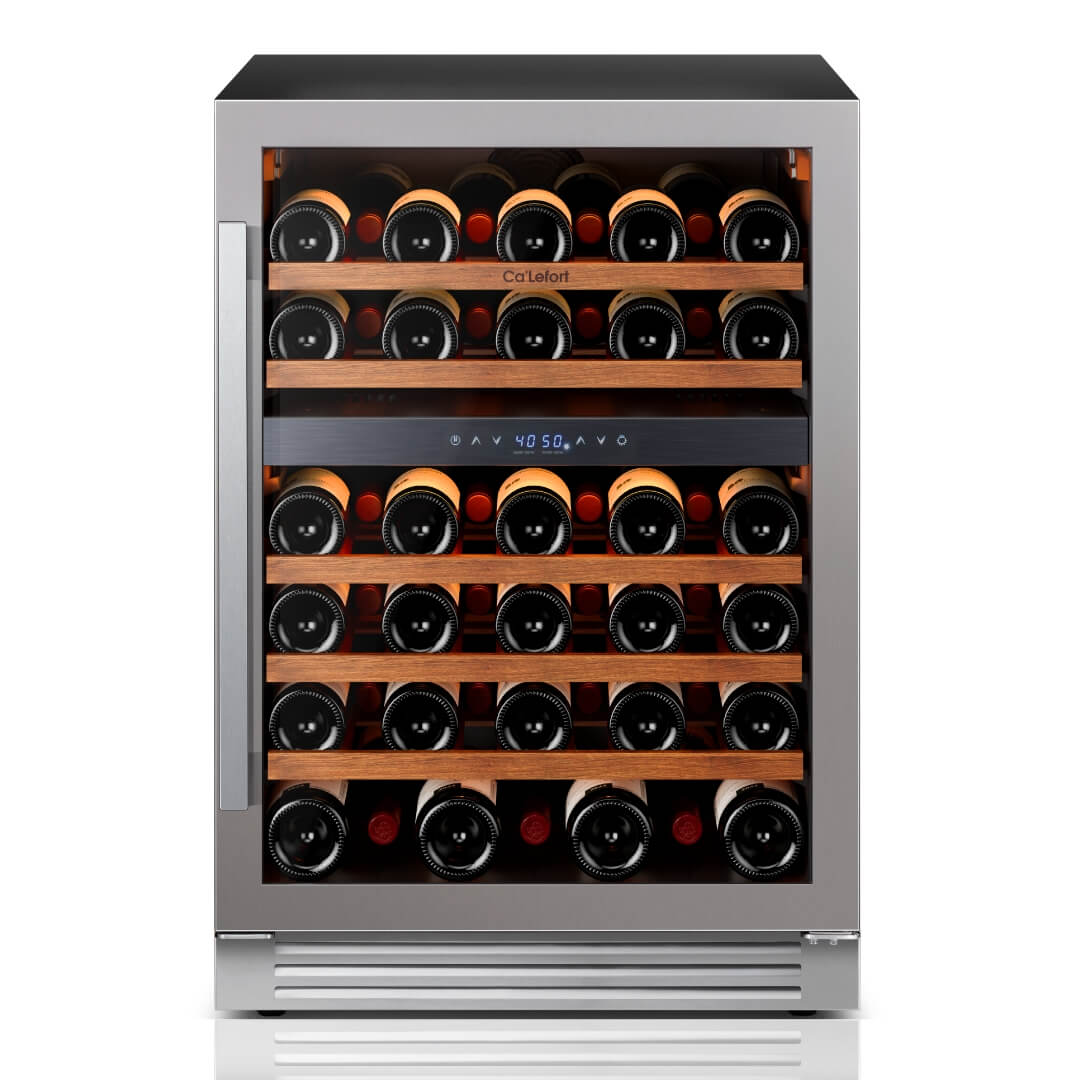
Ca'Lefort 24 inch Dual Zone Wine Fridge
The refrigerator does not have to be organized strictly by country or grape variety, either. For everyday use, arranging bottles according to when you plan to open them can be more useful. Keep near-term dinner bottles visible and easy to reach, separate welcome wines from main-course bottles, and place longer-term or backup bottles farther from the most accessible positions. This makes preparing for dinner easier without repeatedly moving the rest of the collection.
Before a weekend gathering, confirm the menu and wine choices the day before. Move rosé or Grenache Blanc toward the appropriate serving zone, keep red Grenache stable, and make smaller temperature adjustments closer to dinner. Open or decant a wine only when its condition and place in the meal call for it. Good preparation does not have to make dinner more formal. It simply allows the host to spend less time moving between the kitchen and the wine refrigerator and more time at the table.

Choosing Grenache for Your Next Fall Dinner
Start with a practical sequence. Identify whether the bottle is red Grenache, Grenache rosé, or Grenache Blanc. Consider its body, acidity, fruit ripeness, alcohol, and oak influence. Then look at the dish as a whole, especially its sauce, seasoning, and cooking method, and choose a wine with comparable intensity. Finally, adjust the serving temperature and decide whether the opened wine would benefit from air.
Grenache is compelling because it is not limited to one flavor profile or one place at the table. It can begin the evening as a dry rosé, continue beside roast chicken as Grenache Blanc, and return with the main course as a red wine.
A successful pairing does not need to prove that every rule was followed. If the wine does not overwhelm the food, the food does not flatten the wine, and everyone at the table is happy to return to their glass, the pairing is doing what it should.
Frequently Asked Questions
1. Is Cannonau the Same Grape as Grenache?
Cannonau is the name commonly used for Grenache in Sardinia and is generally regarded as a local expression of the same grape family. That relationship does not mean the resulting wines will taste identical. Climate, vineyard conditions, yields, and regional winemaking traditions can give Cannonau a distinct profile, so it is better understood as a regional expression of Grenache rather than a direct counterpart to French or Spanish examples.
2. How Long Does Grenache Last After Opening?
For the freshest fruit, aim to drink red Grenache within two to three days of opening. A more structured wine may remain enjoyable for three to five days when properly resealed and refrigerated. Grenache rosé and Grenache Blanc should also be resealed, chilled, and consumed within several days.
The less wine left in the bottle, the greater its exposure to oxygen and the faster it will usually change. Even opened red wine is generally better refrigerated than left in a warm room. More storage guidance is available in Ca’Lefort’s article on how long red wine lasts after opening.
3. How Can You Tell If Opened Grenache Has Gone Bad?
Compare the wine with how it smelled and tasted when first opened. If fresh fruit has disappeared and been replaced by sharp vinegar, solvent, musty, or stale-nut aromas, and the palate has become flat, sour, or unbalanced, the wine has probably oxidized or deteriorated beyond an enjoyable point.
A wine that has simply lost some freshness is not necessarily unsafe. Unexpected fizz, unusual viscosity, visible contamination, or strongly abnormal odors, however, are reasons to discard it.
4. Is Grenache a Good Wine for Thanksgiving Dinner?
Yes, provided the style suits the side dishes. Turkey itself is relatively mild, so cranberry sauce, gravy, herb stuffing, roasted root vegetables, and sweet sides often have more influence on the pairing.
A fruit-forward red Grenache with moderate tannin can work across turkey, herbs, and roasted vegetables. Grenache rosé can accompany lighter appetizers, while Grenache Blanc works well with white meat and creamy sides. Rather than expecting one bottle to suit every dish, consider offering one red and one white or rosé so guests have a choice.
5. Should Grenache Bottles Be Stored Horizontally?
Grenache sealed with natural cork is commonly stored horizontally for long-term cellaring so the wine remains in contact with the cork. Bottles with screwcaps or other non-cork closures do not depend on this position and may be stored upright.
For short-term storage, stable temperature, protection from light, and limited vibration generally matter more than bottle orientation. Once opened, reseal the wine and refrigerate it upright to reduce the surface area exposed to oxygen.


