

Key Takeaways
- A seasonal wine-fridge reset should reflect how you plan to use wine in the weeks ahead, not simply replace summer bottles with reds.
- Organize shelves by use frequency, keeping near-term bottles easy to see and reach.
- For mixed collections, a dual-zone wine fridge allows reds and whites to remain in separate, stable storage environments rather than sharing one compromise setting.
- Real-world capacity depends on bottle shapes, shelf layout, and the buffer space needed for new bottles.
- Place and organize the wine fridge around your kitchen, dining, or home-bar flow so it supports everyday routines and hosting naturally.
As summer whites, rosés, and sparkling wines start sharing space with richer reds, a wine fridge may need more than a few new bottles. The change in season often brings a change in how wine is enjoyed at home. Dinners linger a little longer, the kitchen and dining room return to the center of the evening, and a casual weekend bottle may sit alongside wines being saved for upcoming gatherings.
A seasonal reset is not about replacing every white with a red or filling every open shelf. It is a chance to reconsider how your wine fridge supports the way you actually live. Which bottles should be easiest to reach? Which should remain undisturbed? How much room do different bottle shapes really require? And does the fridge still work naturally within your kitchen, dining area, or home bar?

Why Fall Is the Right Time to Reset Your Wine Fridge
Your Everyday Wine Mix Changes
In summer, a wine fridge may be organized around bottles intended for near-term use, such as crisp whites, rosés, and sparkling wines that are easy to reach before dinner or when guests arrive. As fall approaches, the mix often shifts. More reds may come into regular rotation, while whites and sparkling wines remain part of the collection.
That transition can reveal a storage system designed around a different season. Bottles you now reach for most may sit behind less frequently used summer selections. Larger-format bottles may take up shelf space unevenly, while new purchases arrive with no obvious place to go.
Resetting the fridge early gives the collection a structure that reflects the weeks ahead instead of simply layering fall bottles onto a summer arrangement.
Entertaining Moves Back Indoors
For many homes, summer entertaining moves easily between the kitchen, patio, outdoor table, and backyard. As fall arrives, gatherings often shift toward the kitchen, dining room, and a more considered home bar. Wine becomes part of a longer rhythm, from preparing dinner and sitting down to eat to lingering after the plates have been cleared.
That change affects what makes a wine fridge useful. Capacity still matters, but visibility and access matter too. A fridge positioned near the dining area or serving surface can make dinner feel more organized without becoming the focus of the room.
When bottles, glassware, and opening tools sit along a natural path through the space, the wine fridge becomes a quiet part of the evening rather than another step the host has to think about.
Start With Inventory, Then Reorganize: Four Questions to Ask
Which Bottles Will You Reach for Most Often?
Before moving anything, think about your collection by use rather than label, region, or purchase date alone.
Start with the bottles you are likely to open within the next two or three weeks. These might include wines for weekday dinners, a relaxed weekend meal, or a small gathering. Keep them in the most visible and accessible part of the fridge.
The goal is not to create a display. It is to reduce unnecessary movement. If opening one bottle means shifting several others, the fridge becomes harder to use and the collection more difficult to track.
Keeping near-term bottles together can also make it easier to see what you already have and when your everyday selection is beginning to run low.
Does Your Collection Need More Than One Storage Environment?
A mixed collection often includes wines with different storage needs and different rates of turnover. When everything shares a single temperature zone, you may end up making compromises or repeatedly adjusting the fridge around a particular meal or bottle.
A dual-zone wine fridge provides a more practical structure for a mixed collection. One zone can be assigned to whites and sparkling wines, while the other maintains a separate environment for reds.
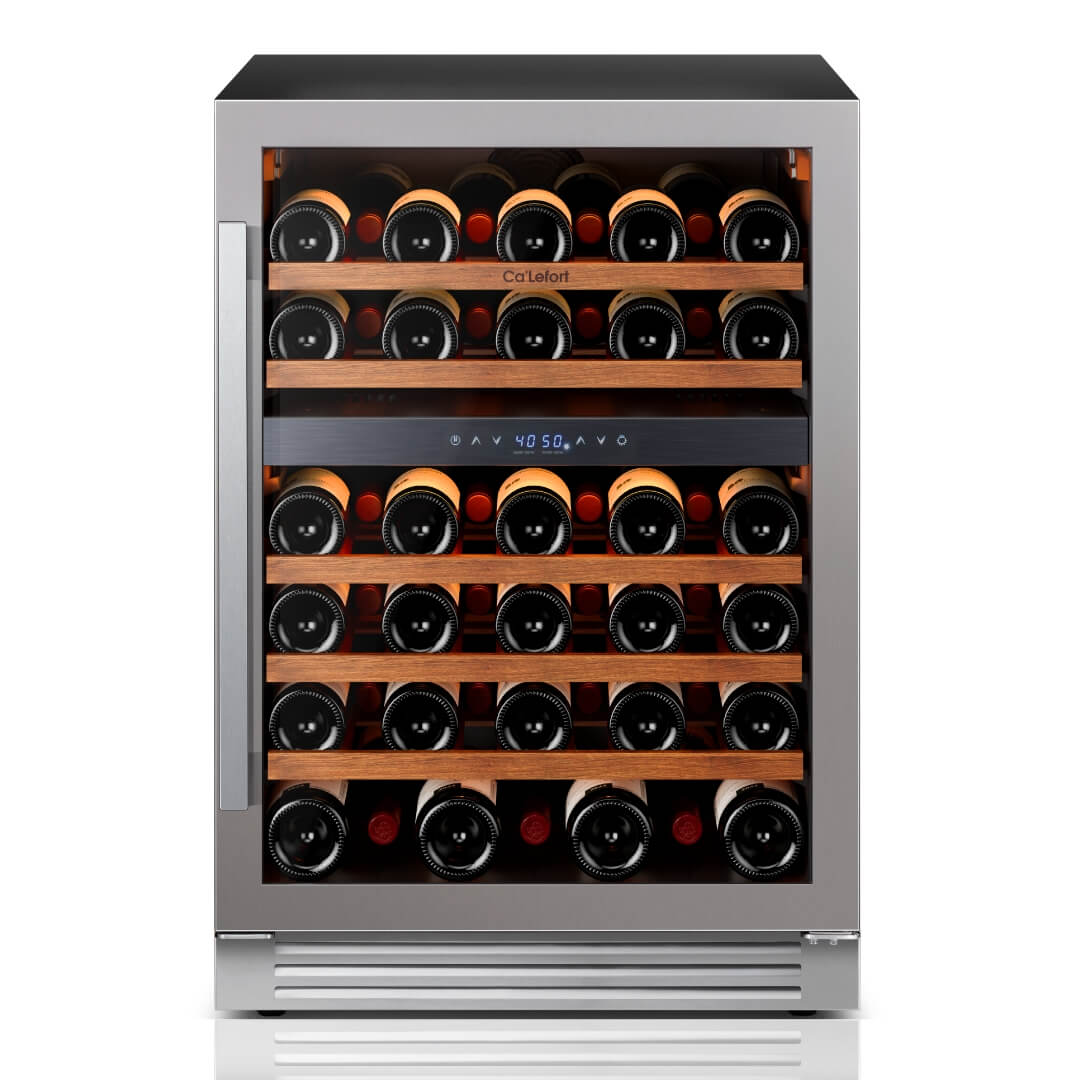
Ca'Lefort 24 inch Dual Zone Wine Fridge
This allows each part of the collection to remain within a temperature range better suited to its style instead of placing every bottle in the same setting. If you regularly keep both reds and whites on hand, that separation can make everyday storage more stable and easier to manage.

Is Advertised Capacity the Same as Usable Capacity?
Bottle capacity is a useful starting point, but it does not always reflect how a real collection fits inside a wine fridge.
Most stated bottle counts are based on standard Bordeaux-style bottles, while Burgundy bottles, Champagne bottles, wider shoulders, and other formats may take up more room across a shelf and reduce the number of bottles that fit comfortably.
During a seasonal reset, pay attention to how many bottles the fridge can hold without forcing shelves, obscuring labels, or making bottles difficult to remove. That is your usable capacity, and it may be more helpful for everyday planning than the maximum figure listed on a specification sheet.
Grouping larger bottles on shelves where they fit best can also help prevent uneven gaps from reducing usable space throughout the fridge.
Does the Wine Fridge Still Fit Your Home’s Flow?
Storage works best when it reflects the way people actually move through a room.
Consider where the wine fridge sits in relation to the dining table, food-prep area, home bar, and glassware storage. If retrieving a bottle means crossing through the busiest part of the kitchen, or if glasses and opening tools are stored far away, the setup may look organized while still feeling inconvenient during dinner.
For homeowners planning a kitchen refresh or dedicated entertaining area, fall can also be a useful time to reconsider placement.
A built-in wine fridge can sit naturally within a cabinet run near the dining area. A panel-ready wine fridge can integrate with custom millwork to maintain a more unified cabinet line. A freestanding unit may work well in a home bar, sideboard area, or transition space between the kitchen and living room.
The right configuration is the one that supports the way the home is actually used rather than simply filling an available opening.
Red Wine Does Not Necessarily Belong at “Room Temperature”
Why “Room Temperature” Is a Misleading Rule Today
“Serve red wine at room temperature” can be useful shorthand only when the room itself is relatively cool. The idea comes from a time when indoor environments were often cooler than many of today’s heated kitchens, open-plan living areas, and dining rooms filled with cooking heat and guests.
In a warmer modern home, room temperature may be higher than the range at which many red wines are typically served.
When red wine becomes too warm, alcohol may become more noticeable, while the fruit and structure can feel less defined. The goal is not to serve red wine cold. It is simply to avoid treating the temperature of the room as the ideal serving condition for every red wine, every season, and every bottle.
Cabernet, Pinot Noir, and Grenache Do Not Show Their Best at the Same Temperature
Full-bodied Cabernet Sauvignon generally benefits from a slightly warmer serving range, often around 60–65°F (15–18°C). Its structure, darker fruit profile, and firmer tannins have room to open gradually at this range. When served too warm, however, the wine may feel heavier and its alcohol more pronounced.
Pinot Noir is generally more comfortable at a cooler range, often around 55–60°F (13–16°C). Its lighter body, lifted aromatics, and more delicate texture can lose definition as the wine becomes warmer.
Grenache often falls somewhere between the two in practical terms. Depending on its style and blend, it may show ripe fruit and spice well around 57–62°F (14–17°C), while excessive warmth can make the alcohol more noticeable.
These ranges are guides rather than fixed rules. Vintage, alcohol level, bottle age, and the food being served can all influence the final temperature. The more useful principle is that red wines are not interchangeable simply because they share the same color category.

Storage Temperature and Serving Temperature Are Two Different Decisions
Storage temperature and serving temperature are related, but they serve different purposes.
Storage is about maintaining stable conditions for the broader collection over time. Serving temperature is the final adjustment made for the particular bottle being opened, based on its style, structure, and the occasion.
During a seasonal reset, begin by giving each zone a clear long-term role, such as one for reds and another for whites or sparkling wines. Once that structure is established, bottles planned for an upcoming dinner can be kept within easy reach and adjusted as needed without repeatedly changing the storage conditions for the rest of the collection.
This allows a dual-zone wine fridge to support both consistent storage and more considered serving throughout the season.
How to Reassign Space Inside Your Wine Fridge
Create an Easy-Reach Zone for Near-Term Bottles
Reserve the most accessible shelves for bottles you are likely to use soon. These might include wines planned for upcoming dinners, familiar bottles in regular rotation, or a few options set aside for a relaxed weekend at home.
Organize this area by frequency of use rather than prestige or price. A wine fridge becomes easier to live with when the bottles you reach for most are simple to identify and remove.
This distinction also helps keep longer-term bottles from being disturbed every time the door is opened.
Keep Stable Zones for Different Bottle Types
Once near-term bottles are in place, organize the rest of the fridge around consistent red-and-white storage.
In a dual-zone wine fridge, assign one zone to whites and sparkling wines and the other to reds so each category can remain in its own long-term storage environment. Within those zones, place bottles intended for longer storage where they are less likely to be moved, and keep wider formats where they will not compromise the usable capacity of an entire shelf.
This approach keeps the fridge from becoming a series of temporary arrangements. When a new bottle arrives, it can be placed according to its wine style, bottle shape, and assigned zone rather than prompting another complete reshuffle.
The result is a system that remains easier to maintain through fall and into the holiday hosting season.
Leave Room for New Bottles and Short-Term Changes
A completely full wine fridge can look satisfying, but it leaves little flexibility for the way a collection naturally changes.
Fall may bring new purchases, gifts, bottles chosen for guests, or wines set aside for upcoming meals. Without buffer space, each addition can require rearranging much of the fridge.
Leaving part of a shelf open is not necessarily wasted capacity. That space gives the system room to adapt. It becomes easier to add a few bottles before a dinner, make space for a new arrival, or adjust the collection without disturbing everything else.
Habits That Affect Long-Term Wine Fridge Organization
Avoid Resetting the Entire Fridge Around One Dinner
A wine fridge should support the collection you keep most of the time, not be reorganized for a single meal.
Once reds and whites have been assigned to separate zones at appropriate storage temperatures, keep that underlying arrangement consistent. Bottles planned for dinner can stay within easy reach in their assigned zones, with any final serving adjustment made to the individual bottle rather than to the entire fridge.
If the same types of wine repeatedly compete for space, it may be a sign that the current capacity or zone configuration no longer matches the way your collection is evolving.
Do Not Treat the Wine Fridge as Overflow Storage
When kitchen storage becomes tight, a wine fridge can easily turn into a place for unrelated beverages, loose items, or anything that does not fit elsewhere.
That may solve an immediate problem, but it can make the wine collection harder to manage. Once too many unrelated items enter the fridge, it becomes more difficult to see what you have, what you plan to use, and how much space remains.
A wine fridge can hold a varied collection, but every part of the interior should still have a purpose. Keeping the space intentional makes inventory easier to follow and prevents the wine fridge from becoming another crowded extension of the main refrigerator.
Do Not Wait Until Guests Arrive to Notice a Capacity Problem
It is easy to discover a capacity problem only when preparing for guests. Bottles intended to stay together may need to move into the kitchen refrigerator, new purchases may have no logical place to go, or a planned selection may be difficult to find behind other inventory.
A fall reset gives you a chance to notice these issues earlier.
The question is not whether the fridge can accommodate the largest gathering of the year. It is whether it can comfortably support your everyday wine collection while leaving reasonable room for occasional hosting.
If wine frequently competes with food in the main refrigerator, or if the collection can no longer be organized into a clear and stable system, understanding the difference between a wine cellar and a wine fridge can help clarify whether you need longer-term storage, more accessible everyday capacity, or a combination of the two.
Make the Wine Fridge Part of a Considered Fall Home
Fall entertaining rarely calls for a major redesign. More often, it is the quieter details that make a home easier to enjoy: a clear serving surface, a dining area ready for a longer meal, and storage that lets the host stay present instead of searching through cabinets.
A wine fridge should belong naturally within that setting.
In the kitchen, it can keep wine accessible without taking over the room. Near the dining area, it can keep bottles close to the table while leaving the main refrigerator focused on food. In a home bar, it can sit alongside glassware and a small serving surface to create a practical, self-contained area for after-dinner hosting.
For Ca’Lefort, thoughtful wine storage is not defined by a single appliance feature. It is about how naturally the appliance belongs within the home, supporting stable storage, easier access, and a more composed way to host.

A Seasonal Reset That Leaves Room for What Comes Next
Moving from summer whites to fall reds is ultimately an opportunity to reconsider how wine is stored and used at home.
Start with the collection you actually have. Give reds, whites, and sparkling wines clear long-term storage roles, account for usable rather than theoretical capacity, and organize shelves around the bottles you reach for most.
When everyday bottles are easy to find, longer-term bottles have a stable place, and new additions do not require a complete reshuffle, the wine fridge becomes easier to live with throughout the season.
For a mixed collection, choosing the right dual-zone wine fridge can be part of creating a storage system that adapts naturally as your wine habits, entertaining plans, and home continue to evolve.
Frequently Asked Questions
1. Can a freestanding wine fridge be installed inside cabinetry?
Not necessarily. Freestanding and built-in models may have different ventilation requirements, so a unit should not be installed inside cabinetry simply because it fits the opening.
Before installation, check the specific model’s ventilation design, installation instructions, and clearance requirements. An installation that does not follow those requirements may affect cooling performance or long-term reliability.
2. Can a wine fridge store opened bottles?
Yes, provided the fridge has a suitable area for upright storage and the bottle can be securely resealed.
Most standard wine-fridge shelves are designed for unopened bottles stored horizontally, so an opened bottle should not be forced into an unstable position. Check the shelf configuration of the specific model before storing bottles upright.
3. Can wine be stored in its original cardboard case inside a wine fridge?
It is generally more practical to remove bottles from a full cardboard case before placing them in a wine fridge. Cases take up substantial space and can make individual bottles more difficult to see, access, and organize.
If you want to keep the original packaging for transportation or collecting, store it separately and arrange the bottles according to the fridge’s shelf design.
4. How often should a wine fridge be cleaned and maintained?
Wine-fridge maintenance does not need to be complicated, but the interior, shelves, door gasket, and ventilation areas should be cleaned periodically to prevent dust and residue from building up.
Disconnect the unit from power before cleaning, and use a soft cloth with an appropriate mild cleaning method. Avoid harsh products that could damage interior surfaces, glass, or seals, and always follow the care instructions for the specific model.


