

Key Takeaways
- Plan a home bar around how drinks are stored, served, refilled, and cleared, not just how the space looks.
- Place the bar close to where people naturally gather so guests do not need to move through the main cooking zone for every drink.
- Separate everyday food refrigeration from entertaining beverages when the two regularly compete for space.
- Choose a wine fridge or beverage fridge based on your usual drink mix, not the demands of one large holiday weekend.
- Design for everyday use first, then handle occasional Labor Day overflow with flexible backup storage.
Labor Day weekend often feels like summer’s last real opportunity to gather at home. Dinner might start in the kitchen, move out to the patio, then drift into the living room as the evening cools down. Some guests want wine, others reach for beer or sparkling water, while bottled water, soda, mixers, and extra drinks need to stay cold for several hours.
What makes an evening like this feel effortless often has less to do with the menu than with how easily those drinks can be stored, accessed, served, replenished, and cleared.
That’s what makes Labor Day such a useful test of whether a home bar actually works.
A well-planned home bar is more than a place to display bottles. It is a compact beverage service area that brings together refrigeration, storage, glassware, opening tools, counter space, and backup inventory. When those functions are scattered between the kitchen, dining room, pantry, and living room, even an attractive bar can create unnecessary movement once guests arrive.
Planning a better home bar for Labor Day, then, should not begin with holiday decorations or a longer drink list. It should begin with a more practical question: Can the space support the way drinks are actually served throughout the evening?
The best solutions keep working long after Labor Day is over. A home bar that improves a holiday gathering but feels unnecessary during an ordinary Friday dinner has probably been designed around the event rather than the household.

Start With How People Will Use the Bar, Not How It Looks
Home bars are often planned from the outside in. Cabinet finishes, countertops, lighting, shelving, and appliances may be chosen before anyone thinks carefully about the sequence of tasks involved in making or serving a drink.
A more useful starting point is the workflow.
Most beverage service follows the same basic sequence: retrieve a drink, find the appropriate glass or tool, open or pour it, use a clear surface for preparation, return refrigerated items when necessary, replenish inventory later, and eventually deal with empty bottles and used glassware.
When those steps take place in several different parts of the house, the bar is not functioning as a complete service area.
Imagine wine stored in the kitchen refrigerator, stemware in a dining-room cabinet, the corkscrew in a kitchen drawer, and sparkling water in the pantry. The home may technically have a bar area, but preparing even one round of drinks requires moving between several different zones.
Labor Day tends to expose this weakness because more people are using the space for longer periods. One useful way to evaluate the setup is to ask: How many separate places do I need to visit before I can put a finished drink in someone’s hand?
If the answer is three or four, there is probably room to simplify.
It also helps to decide whether the bar will be primarily self-service or host-served. Bottled water, beer, soda, and sparkling water work well in a self-service arrangement because guests can help themselves without interrupting the host. Wine, cocktails, and drinks that require particular glassware or preparation often work better in a host-controlled area.
Most homes fall somewhere in between. Everyday packaged drinks can remain visible and easy to access, while wine and more involved drinks stay closer to the working side of the bar. That distinction can influence everything from refrigerator placement to cabinet organization.
Put the Home Bar Where the Evening Naturally Moves
The kitchen is the default location for many beverage refrigerators because it provides convenient access to food storage, sinks, ice, and cleanup. But the most convenient place to install a refrigerator is not always the most useful place to serve drinks.
A better question is: Where are the drinks actually being consumed?
Thinking about where beverage refrigeration fits into the home can help determine whether the kitchen, dining area, living room, or an indoor-outdoor transition space makes the most sense.

If most Labor Day activity moves between the patio and living room, keeping every cold drink deep inside the kitchen sends guests through the food-preparation area each time they want another beverage. If the evening later shifts to the living room but wine, glasses, and water remain in the kitchen, the host may find themselves repeatedly stepping away from the conversation.
A home bar works best when it sits close to the social areas it serves while staying out of the main cooking workflow. This follows a broader kitchen-planning principle: dedicated beverage zones can reduce traffic through the main cooking area, helping keep secondary tasks from competing with food preparation.
| Home Bar Location | Main Advantage | What to Consider | Best Suited For |
|---|---|---|---|
| Near the kitchen island | Easy replenishment and cleanup | Guests may enter the main cooking zone | Hosting while cooking |
| Dining-room sideboard | Natural connection to dinner | Limited access to water and ice | Wine-focused entertaining |
| Butler’s pantry | Strong storage and visual organization | Less convenient for guest self-service | Formal hosting and larger inventories |
| Living-room bar | Convenient after dinner | Requires dedicated beverage storage | Wine nights and after-dinner drinks |
| Indoor-outdoor transition area | Easy access from patio or backyard | Appliance suitability and environment require planning | Summer and Labor Day entertaining |
For many homes, the best answer is not a completely separate bar but a beverage station positioned between the kitchen and the main entertaining space. A dining-room cabinet, the outer end of a kitchen run, a butler’s pantry, or cabinetry near a patio door can all serve this role.
The objective is simple: drinks should move toward the guests instead of guests repeatedly moving toward the kitchen.
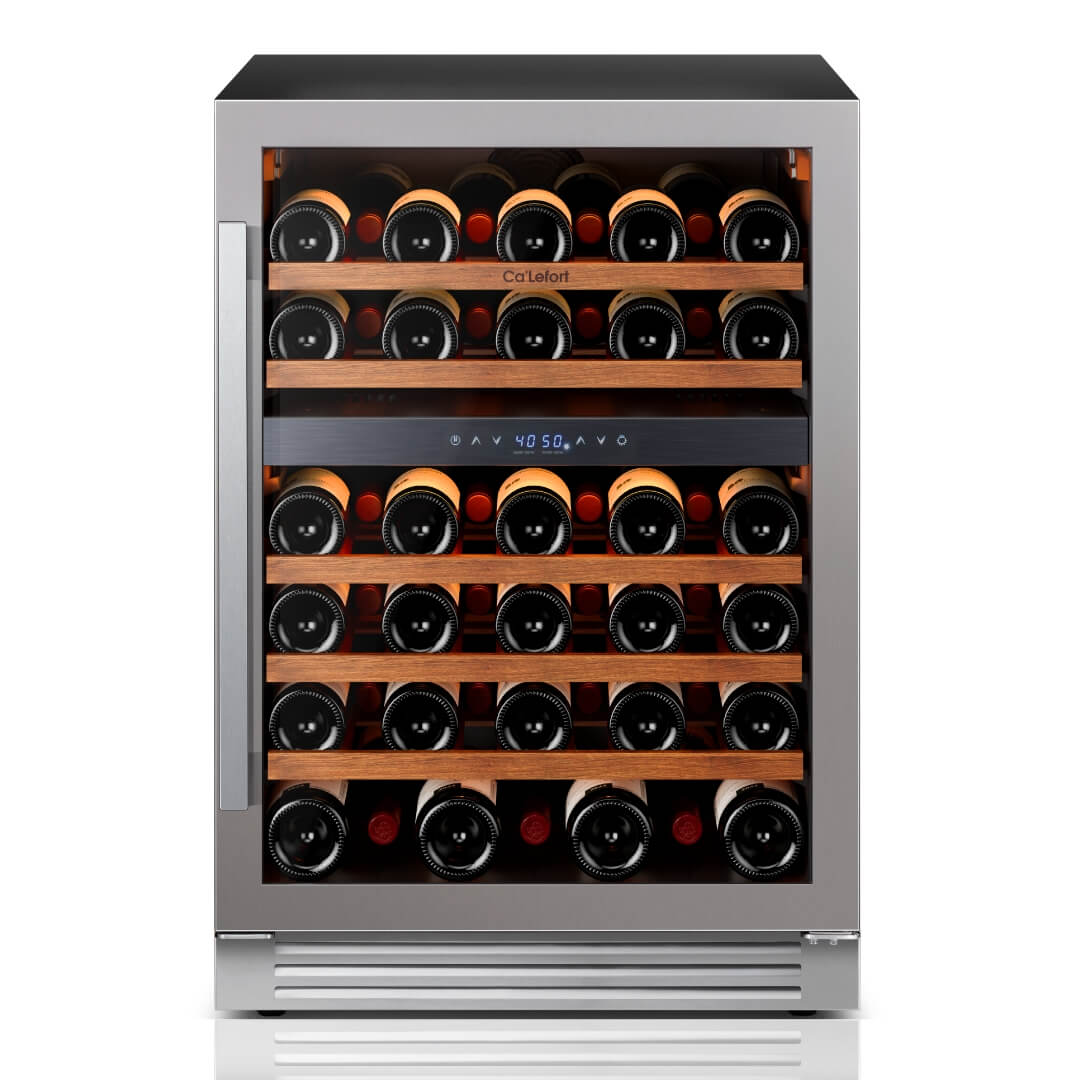
Ca'Lefort 24 inch Dual Zone Wine Fridge
Treat Everyday Food Refrigeration and Entertaining Refrigeration as Different Jobs
Before a long weekend, it can be tempting to fill the main refrigerator with drinks. But that refrigerator is already responsible for vegetables, dairy, leftovers, meat, condiments, meal-prep ingredients, and everyday family beverages.
Once beer, sparkling water, white wine, soda, mixers, juice, and additional bottles are added, the issue is not just shelf space. Food and drinks follow different storage priorities.
Food storage typically revolves around freshness, meal preparation, and household routines. Entertaining beverages are more likely to be organized around drink type, packaging, serving temperature, and frequency of access.
When those two systems compete for the same shelves, both can become less convenient. Food gets moved temporarily to make room for drinks. Guests repeatedly open a refrigerator filled with dinner ingredients to find bottled water. Someone preparing food shares the same working area with people looking for another beer.
A dedicated beverage refrigerator can address that conflict by separating the two jobs rather than simply adding capacity. The primary refrigerator remains focused on food, while the home bar handles drinks.
That does not mean every household needs another refrigerator. If beverages are rarely kept at home and larger gatherings happen only occasionally, an ice bucket, temporary cooler, or short-term refrigerator reorganization may be perfectly adequate.
Permanent equipment makes the most sense when the same storage conflict appears during ordinary weeks, not just during one holiday.
Not Every Drink You Buy Needs to Be Cold at the Same Time
Another common planning mistake is treating total beverage inventory as refrigerated inventory.
They are not the same thing.
A more efficient home bar distinguishes between service inventory and backup inventory. Service inventory is what guests are likely to drink during the next several hours. Backup inventory is available for replenishment but does not necessarily need to occupy cold-storage space immediately.
A case of sparkling water, for example, does not need to be fully refrigerated if only part of it is likely to be consumed before the refrigerator can be restocked. Extra soda, beer, or bottled water can remain in a pantry, garage, or nearby storage area until needed.
This distinction can reduce the amount of permanent refrigeration a household actually needs.
What gets priority inside the refrigerator should also reflect how people use it. Bottled water, soda, and sparkling water are often among the most frequently accessed items, so keeping them easy to see and reach can make self-service simpler. Beer and canned drinks can be grouped according to package height and shelf configuration.
Wine requires a different approach because bottle orientation, temperature stability, and shelf design also need to be considered.
Mixers and cocktail ingredients are generally more useful near the surface where drinks are prepared rather than wherever an open refrigerator shelf happens to be available.
The goal is not to fill every inch of refrigeration. It is to give the most useful cold-storage space to the drinks most likely to be served.
Wine Fridge or Beverage Fridge? Choose Based on What You Actually Serve
A home bar refrigerator should reflect the household’s normal beverage habits rather than the menu for a single holiday.
A wine fridge makes the most sense when wine is a meaningful part of everyday or weekly use. Its interior is generally organized around wine bottles rather than cans and mixed packaging, with storage designed around the needs of a wine collection.
For households keeping a mixed wine collection, multiple temperature zones can also reduce compromises between different types of wine. The value of dual-zone storage extends beyond simply assigning one compartment to red wine and another to white. It provides greater flexibility when different bottles benefit from different storage conditions.

A beverage refrigerator solves a different problem. Its interior needs to accommodate beer bottles, standard cans, slim cans, sparkling water, bottled drinks, and other packages of varying heights. Adjustable shelf spacing and efficient use of vertical space therefore become particularly important.
If a household primarily consumes soda, beer, water, and other packaged drinks, a beverage-focused configuration will often make better use of the available space than racks designed specifically for wine bottles.
For mixed home bars, the more useful question is which category dominates in everyday life.
| Consideration | Wine Fridge | Beverage Fridge |
|---|---|---|
| Primary storage | Wine bottles | Beer, soda, water, and mixed drinks |
| Shelf design | Bottle-focused storage | Flexible storage for cans and bottles |
| Temperature use | Wine-focused temperature management | General beverage cooling |
| Best home bar type | Wine-centered entertaining | Mixed-drink hosting |
| Main planning question | What wines do you regularly keep? | What drink packages do you regularly store? |
If wine accounts for most long-term storage, it should guide the refrigerator configuration. If the household goes through substantially more sparkling water, beer, soda, and bottled drinks, dedicating most cold storage to wine racks may be less practical.
Households with meaningful demand for both categories may benefit from separated zones or dedicated storage for each.
The important principle is to avoid choosing a permanent appliance around the most demanding weekend of the year. Labor Day can reveal what is inconvenient about the current setup, but everyday household habits should determine the long-term solution.
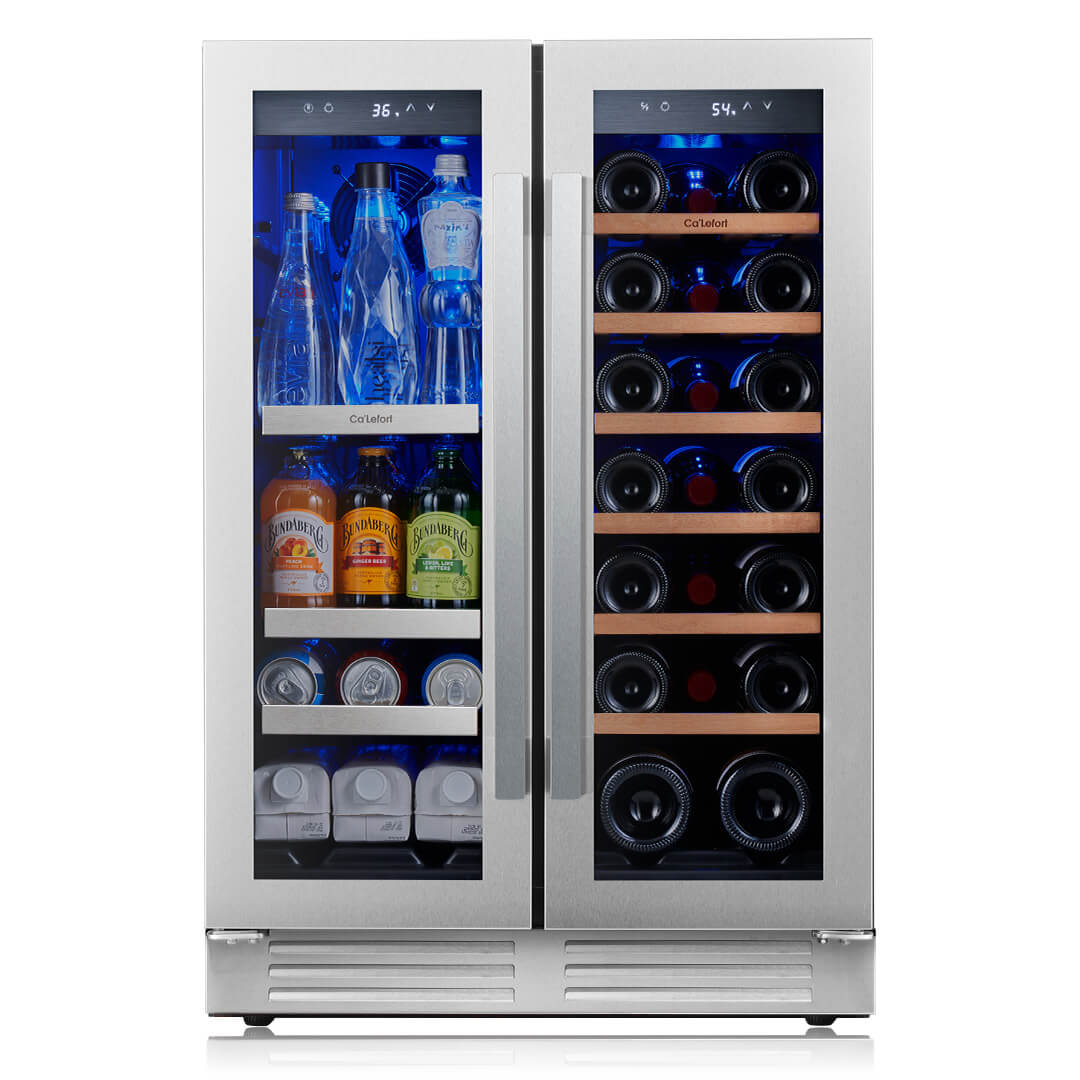
24'' Dual Zone Wine and Beverage Fridge
Leave Enough Counter Space to Actually Serve Drinks
One of the most overlooked home bar resources is not refrigeration. It is usable counter space.
Styled home bars often feature bottles, glasses, flowers, trays, cocktail tools, books, and decorative objects across most of the surface. The result may photograph well, but once someone needs to open a bottle, pour several glasses of wine, prepare a garnish, or set down a serving tray, very little working space remains.
A functional bar needs enough clear surface for the tasks it is expected to support. That might include opening bottles, pouring drinks, setting out glasses, adding ice, handling a tray, or temporarily placing an empty bottle.
A useful way to organize a small counter is to think in three zones.
The display zone can hold a limited number of decorative objects or bottles. The working zone should remain mostly clear so drinks can actually be prepared. The service zone can hold frequently used glasses, napkins, or a tray.
Even a relatively compact bar can work well when these functions are separated. A larger bar covered completely in objects can be far less useful.
This is one reason a real home bar should not be planned directly from lifestyle photography. A photograph only needs to look finished for a moment. A working bar needs to remain useful for several hours.
Store Glassware and Tools Where Drinks Are Actually Made
Traditional household storage often separates beverage-related items by category rather than by use. Glasses may all be kept together in one kitchen cabinet, corkscrews in a utensil drawer, cocktail tools somewhere else, and serving accessories in the dining room.
Once a separate home bar is established, that arrangement can create the same unnecessary movement the bar was meant to reduce.
Organizing by frequency of use is often more effective. Everyday wine glasses, commonly used tumblers, a corkscrew, a bottle opener, napkins, and other frequently used tools should remain within easy reach of the beverage-preparation area.
Less frequently used items, such as decanters, specialized cocktail tools, or occasional stemware, can be stored in drawers or closed cabinetry.
Not every glass needs to be displayed, either. Open shelving can work well for a limited number of frequently used pieces, but displaying an entire glassware collection can quickly turn functional storage into visual clutter.
A well-organized home bar is not necessarily one that contains fewer things. It is one that gives the most accessible space to the things used most often.
Plan for the Second Round, Not Just the First
Home bars rarely struggle during the first 30 minutes of a gathering.
At the beginning of the evening, the refrigerator is stocked, glasses are clean, ice is ready, and everything is arranged exactly as planned. The more telling moment comes two hours later.
Where does the next round of cold drinks come from? Where do empty bottles go? What happens when used glasses begin taking over the counter? Is extra ice nearby? Does the host have to return to the kitchen for every refill?
A bar that only works for the first round is solving only part of the problem.
Backup drinks should have a predictable location. Lower cabinets or a nearby pantry can hold unopened inventory that does not need immediate refrigeration. The refrigerator can then focus on drinks currently being served rather than storing every package purchased for the weekend.
Empty bottles and recycling also need somewhere to go. Without a plan, they gradually occupy the same counter space needed for serving.
If the bar is farther from the kitchen, consider whether it genuinely requires additional infrastructure such as a sink or ice maker. In many homes, a simpler arrangement with good storage, trays, and a predictable replenishment routine is enough.
Good hosting infrastructure is often less about adding more features and more about reducing unnecessary trips.
Do Not Design a Permanent Home Bar Around One Labor Day Weekend
Holiday gatherings can exaggerate capacity needs. Permanent rooms and appliances should not be sized around the most demanding two or three days of the year.
If a household only needs space for several dozen extra drinks during occasional parties, dedicating large amounts of year-round refrigeration to those events may not be an efficient use of space.
Temporary overflow is often the better answer. A beverage tub, ice bucket, cooler, or unrefrigerated backup inventory can absorb the peak without changing the permanent home bar.
The permanent setup should instead support situations that happen repeatedly: two people opening a bottle of wine after dinner, a few friends stopping by on Friday evening, watching a game with beer and sparkling water, or simply having cold drinks available without crowding the kitchen refrigerator.
That is a more useful standard for determining capacity.
Labor Day should test the flexibility of the bar, not dictate its entire design.
A Better Labor Day Home Bar Is Really a Better Everyday Drink System
A long holiday weekend has a way of revealing problems that are easy to overlook during the rest of the year. The main refrigerator suddenly feels too small. Guests repeatedly enter the kitchen. A corkscrew is never where it is needed. An attractive bar counter becomes difficult to use once several bottles and glasses are placed on it.
Solving those problems does not automatically require more equipment.
Sometimes moving glassware, clearing counter space, separating service inventory from backup inventory, or relocating frequently used drinks is enough to make the existing setup considerably more functional.
A dedicated wine fridge or beverage fridge becomes valuable when it solves a recurring conflict between food storage, beverage storage, and the way people move through the home, not simply because a holiday weekend creates temporary demand.
At its best, a well-designed home bar does several things at once. Drinks have a clear storage system. Refrigerated items are kept under appropriate conditions. Glassware and tools stay close to where they are used. Guests do not need to constantly enter the cooking area. Additional rounds can be replenished without disrupting the evening.
Most importantly, the space should continue to make sense once the party is over.
If the same home bar makes an ordinary dinner, a weekend bottle of wine, or an unexpected visit from friends easier after Labor Day has passed, then it has done something more useful than prepare the house for one long weekend. It has made the home work a little better year-round.

Frequently Asked Questions
1. Can you create a home bar without remodeling the room?
Yes. A home bar does not require a dedicated room or a full built-in installation. A dining-room sideboard, unused cabinet run, pantry area, or compact beverage station can provide many of the same functions when storage, refrigeration, and usable counter space are planned together.
2. Does a home bar need a sink?
No. A dry bar can work well when the space is mainly used for refrigerated drinks, glassware, and serving. A sink becomes more useful when the bar regularly supports drink preparation, rinsing, or cleanup, but adding one also requires suitable plumbing and a more involved installation.
3. Should you choose the refrigerator before designing the cabinetry?
If refrigeration will be built into the bar, selecting the appliance early usually makes planning easier. Exact width, depth, ventilation, electrical requirements, hinge configuration, and door clearance can all affect the cabinet opening and surrounding millwork.
4. When should you start preparing your home bar for Labor Day weekend?
Most of the organization can be handled a day or two in advance. Clear the serving surface, check glassware and supplies, organize refrigerated drinks, and keep backup inventory separate. The goal is to leave only last-minute food and hosting tasks for the day guests arrive.
5. How do you make a Labor Day drink station work for guests of all ages?
Give nonalcoholic options the same visibility and accessibility as the rest of the beverage selection. Water, sparkling water, soda, juice, and other family-friendly drinks should be easy to identify and reach, especially when guests are serving themselves.
6. How do you keep refrigerated drinks cold during an outdoor Labor Day gathering?
Keep most refrigerated inventory in an appropriate refrigerator and move smaller quantities to an insulated cooler or ice-filled serving container as needed. Avoid leaving temperature-sensitive items outdoors longer than necessary, particularly in direct sun or high heat.


