

Key Takeaways
- A meaningful blind tasting starts with a clear comparison, not a random group of concealed bottles.
- Aroma, acidity, tannin, and finish provide useful starting points, while sweetness, alcohol, body, and flavor intensity also shape the experience.
- Keep sensory observations, personal preferences, and judgments about quality separate.
- Temperature, glassware, pour size, tasting order, and ambient aromas can all influence the results.
- The purpose of a wine tasting game is to describe what you experience and understand your preferences more clearly, rather than guess every answer correctly.
As fall evenings grow longer, gatherings often move from the patio back to the dining table, living room, or home bar. A blind wine tasting gives that seasonal shift a little more structure. Instead of simply opening several bottles, guests can compare four wines selected around a clear question.
In this format, “blind” means concealing labels and other identifying information. Guests are free to notice patterns and make guesses, but identifying the grape variety, vintage, or region is not the main objective. The focus stays on aroma, acidity, tannin, body, and finish under reasonably consistent conditions, with sensory observations recorded separately from personal preferences. Think of it as a structured home tasting with enough guidance to make the comparison meaningful.

Why This Wine Game Night Is Not About Guessing the Wine
Identifying a grape variety, vintage, or region in a professional blind tasting takes extensive training and a broad bank of reference wines. Experienced tasters consider color development, aroma profile, acidity, tannin, alcohol, body, and winemaking characteristics before reaching a conclusion, and even experienced tasters do not always arrive at the right answer.
At a casual home gathering, comparison offers a more useful starting point. Guests can notice which glass has more pronounced aromas, which wine makes the mouth water more noticeably, which one feels more drying, and which flavors remain longer after the wine leaves the mouth. Those observations remain useful even when participants do not know formal tasting vocabulary.
Before the first pour, it helps to separate three kinds of judgment. Sensory observation asks what someone actually smelled, tasted, or felt. Preference asks whether they enjoyed the wine and would like another sip. Quality assessment looks more broadly at elements such as clarity of aroma, concentration, balance, structure, and the character of the finish.
These judgments can point in different directions. A group favorite may be simple and immediately appealing, while a more structured wine may reveal greater complexity without being everyone’s first choice. Giving each type of judgment its own place keeps the tasting open and useful for guests with different levels of experience.
Decide What You Want to Compare Before Choosing Four Wines
One of the most common problems with home blind tastings is choosing bottles without a clear comparison in mind. A host might select a crisp white, a sweet wine, a full-bodied red, and a sparkling wine, conceal all four labels, and ask which bottle is “best.” The result may be a preference ranking, but the wines have so little in common structurally that the comparison offers limited insight.
For six to eight participants, four wines divided into two rounds provide a manageable format. Each round compares two wines, giving guests time to move back and forth between the glasses before sensory fatigue sets in. The complete tasting can usually fit into 75 to 90 minutes, including water, a short break, discussion, and the final reveal.
The first round might compare two dry white wines with clearly different structures, focusing on aroma, acidity, and body. One may feel fresher and more linear, while the other feels rounder or fuller, with its winemaking showing more clearly. The second round might compare two reds through tannin intensity, tannin texture, body, and finish, with one showing gentler structure and the other more noticeable grip.
This is a guided comparative tasting rather than a single-variable experiment. Two wines can differ in grape variety, place of origin, vintage, ripeness, alcohol level, and winemaking method at the same time. The evening can show how those particular bottles differ under the same general conditions, while leaving room for the many factors that may be shaping the result.
Use a measured pour rather than pouring freely. An initial pour of approximately 1 to 1.5 fluid ounces per wine gives participants enough to assess while preserving some for a second look. Across four wines, that equals roughly 4 to 6 fluid ounces per participant before any additional pours.
Actual alcohol intake will still vary according to the alcohol by volume of each wine. The National Institute on Alcohol Abuse and Alcoholism defines 5 fluid ounces of wine at 12% alcohol by volume as one U.S. standard drink, so small tasting pours still count toward the evening’s total consumption. Provide water, food, and a spittoon or individual spit cups, and make it easy for anyone who is driving, taking medication, or choosing not to drink to participate through aroma and discussion alone.
NIAAA: What Is a Standard Drink?
Keep the Tasting Conditions as Comparable as Possible
Once the wines have been chosen, how they are served can shape the comparison almost as much as the concealed labels. Temperature, glass shape, pour size, opening time, and ambient aromas all affect perception. A home gathering will never control every variable, but a little consistency helps prevent one obvious difference from dominating the experience.
Storage and serving are best treated as separate steps. Long-term wine storage is about keeping conditions stable; serving preparation is the final adjustment made for an individual bottle. Select the wines in advance and make those final adjustments bottle by bottle rather than repeatedly changing the settings of an entire wine fridge for one evening.
Temperature deserves particular attention. Cooler temperatures can suppress aromatic expression and make sweetness, body, and alcohol feel less prominent. As a wine warms, its aromas and sense of weight often become more noticeable, while alcohol warmth may come forward as well. A tannic red served too cold can also feel firmer and more astringent.
WSET similarly describes temperature, alcohol, acidity, tannin, sugar, and extract as interacting contributors to mouthfeel.
WSET: The Secret Language of Wine: What Is Mouthfeel?
The two wines in a round do not need to be at exactly the same temperature, since different styles may be best served differently. Both should simply be in a reasonable serving condition. Avoid pairing one bottle straight from a very cold refrigerator with another that has been sitting in a warm room for an hour, and pour them at roughly the same time so they warm and open in the glass at a similar pace.
Glassware should stay consistent as well. Ideally, each guest has two identical or closely matched wine glasses for side-by-side comparison. If glassware is limited, one glass can be reused once it is free of residual wine and detergent odors. A large red wine glass and a small, narrow glass can release aromas differently and shape palate perception before the comparison has even begun.
Opaque bottle sleeves or clean wrapping material can conceal labels, with each wine marked by a neutral letter or number. Pouring where guests cannot see the bottles also reduces clues from bottle shape and weight. Decanting every bottle simply for the sake of concealment adds unnecessary variation in air exposure, so use it only when there is a clear reason and treat comparable wines as consistently as possible.
The surrounding room matters too. Scented candles, diffusers, strongly aromatic flowers, recently used cleaning products, grilling smoke, and heavy perfume can interfere with subtle aromas. Water and plain bread or crackers work well during the initial assessment. Cheese, charcuterie, chocolate, and heavily seasoned foods are better introduced after guests have recorded their first impressions, since salt, fat, sweetness, acidity, and heat can all change the way a wine tastes.

How to Assess Aroma, Acidity, Tannin, and Finish
Aroma, acidity, tannin, and finish give a home tasting a practical framework. Appearance, sweetness, alcohol, body, and flavor intensity also contribute to the overall impression, so the four main categories work best as anchors rather than a complete description of the wine.
Aroma: Assess Clarity and Intensity Before Naming Specific Fruits
Smell the wine once before swirling and notice how readily the aromas emerge. Swirl the glass gently, then smell again to see whether the wine becomes more expressive. This gives you an initial sense of intensity before moving into more specific aroma descriptions.
Start with broad families rather than searching immediately for one precise fruit. Useful categories include fruit, flowers, herbs, spices, oak or toast, and aromas associated with bottle development, such as earth, leather, nuts, or dried fruit. “Ripe red fruit” is a perfectly useful note on its own without deciding whether the aroma is strawberry, raspberry, or red cherry.
A pronounced nose may be easier to notice, but intensity alone does not determine quality. A quieter wine can be equally compelling, and different guests may respond to the same aroma in very different ways because detection thresholds and aroma memories vary. One person may think of black cherry while another thinks of plum.
Language such as “reminds me of” or “I notice” keeps those descriptions grounded in perception. If a wine smells clearly unpleasant or unusual, simply note that its condition may need closer attention before assessing intensity and complexity. Diagnosing a specific fault can require experience, especially when reduction, a closed aromatic state, stylistic character, and genuine flaws can overlap.
Acidity: Watch the Salivary Response Instead of Looking Only for Sourness
Acidity is a major structural component of wine, contributing freshness and definition while balancing sweetness, body, and fruit. One useful way to assess it is to notice how strongly and how long the mouth salivates after the wine has been swallowed or spat out. WSET also identifies salivation as a useful clue when assessing acidity and notes that dehydration can suppress this response, causing acidity to seem lower than it is.
WSET: Understanding Acidity in Wine
Guests can record acidity as low, medium, or high. A high-acid wine may feel lively and refreshing, while a lower-acid wine can feel broader or softer. How well either wine works still depends on the balance among sweetness, fruit concentration, alcohol, and body.
When comparing two wines, taste each in turn and wait several seconds. Notice which one stimulates salivation more quickly and which leaves a longer sensation of freshness. Aroma may offer hints, but the physical response in the mouth provides a more useful guide.
Tannin: Treat It as a Tactile Sensation, Not Simply Bitterness
Tannin is most noticeable in red wine, though it can also appear in skin-contact white wines and may be contributed by oak. Tasters often experience it as dryness, grip, friction, or astringency across the gums, tongue, and inside of the cheeks. This sensation arises partly because tannins interact with proteins in saliva, reducing the mouth’s normal sense of lubrication.
Bitterness and tannin may appear together, but they are experienced differently. Bitterness is primarily a taste, while tannin is felt largely through texture and astringency. Record the intensity first, then describe the texture in simple terms such as fine, soft, firm, coarse, or drying.
Tannin level alone also says little about overall body. Alcohol, sugar, extract, and other components contribute to the wine’s sense of weight, while decanting decisions depend on the individual bottle, its age, its condition, and the purpose of serving it. During a home tasting, it can be useful to notice how a wine changes in the glass without turning one dry or grippy impression into a fixed rule about decanting.
Finish: Consider What Remains, Not Just How Long It Lasts
The finish includes the aromas, flavors, and structural sensations that remain after the wine has been swallowed or spat out. Begin by judging whether it feels short, medium, or long, then note what stays behind: fruit, spice, oak, acidity, tannin, bitterness, or alcohol warmth.
Length is only one part of the picture. A finish that lasts may still feel disjointed if harsh alcohol or coarse bitterness dominates. A more useful assessment considers whether the lingering flavors feel clear and coordinated, whether they continue the wine’s main character, and whether they make another sip appealing.
Wait several seconds before drinking water or eating, and give both wines in a round a similar amount of time. Consistency matters more than precision.
Body, Alcohol, and Sweetness Still Matter
Body is the perceived weight and fullness of a wine in the mouth. Alcohol can add warmth and weight, sugar can create roundness, and extract and winemaking choices can also influence texture. High acidity may make a wine feel more linear, while cooler serving temperatures can pull sweetness, body, and alcohol into the background.
A scorecard can include body as a supporting category, with space to note sweetness or alcohol warmth where relevant. Together, these observations help round out the picture beyond the four main characteristics.
How to Run One Complete Blind Tasting Round
Begin by having the host assign neutral numbers or letters to the wines and keep a separate record of the labels. Conceal the bottles before guests arrive and keep the pours as even as possible. Neutral labels help avoid expectations before anyone tastes.
Use the same sequence for every wine. Start with a brief look at color and clarity, then smell before swirling. Swirl gently and assess the aroma again. Take a small sip and record acidity, tannin where relevant, body, flavor, and alcohol warmth, then wait several seconds before assessing the finish.
Ask everyone to write before speaking. When the most experienced or confident guest describes the wine first, others may begin searching for the same aroma and reconsidering their own impressions. Independent notes give the discussion a better starting point, allowing guests to compare experiences rather than work toward one shared answer.
Reveal the wines after both glasses in the round have been assessed. Before showing the labels, ask which wine has more pronounced aromas, higher acidity, more noticeable tannin, and the longer finish. Guests can also record which wine they prefer and which one they would choose for another glass.
After the reveal, the host can add information about the producer, region, vintage, or winemaking. That context may help explain some of the differences, while the notes taken before the reveal remain the most direct record of what each guest experienced.
Build a Scorecard That Separates Observation From Preference
A scorecard should organize the comparison without turning each wine into a single total score. For every round, record Wine A and Wine B side by side, noting color and clarity, aroma intensity and character, acidity, tannin intensity and texture for red wines, body, and finish. Complete these sensory observations before answering the final personal question: Would you pour it again?

The card is intentionally compact for a home wine game night. Sweetness, alcohol, and flavor intensity can be added as brief supporting observations when relevant, but they do not need separate scores. Ask everyone to write independently before discussing the wines so that group comments do not shape their initial impressions.
How a Home Bar Can Support the Tasting
For this event, the home bar works as a service area for preparation, active tasting, and backup supplies. A preparation zone can hold concealed bottles, opening tools, towels, and spare glassware. The tasting zone can contain the current pair of wines, water, neutral palate cleansers, and scorecards, while a backup area keeps unopened wines, additional water, and resealing tools close at hand.
The wine fridge plays a quiet role by keeping the selected bottles stable, organized, and easy to retrieve before guests arrive. Choose the four wines in advance and keep the rest of the collection organized so there is little need to move bottles around during the gathering.

For households that regularly store different wine styles, a dual-zone wine fridge can make day-to-day organization clearer. For a single tasting, final serving adjustments are better handled bottle by bottle than through repeated zone changes.
Placement matters as much as storage. A home bar that sits reasonably close to the tasting area can keep service smooth without pulling the host away from the conversation. Once the wines have been retrieved, opened, and poured, returning to the table or living room should feel effortless.
The best beverage setups tend to work quietly in the background. Bottles, tools, water, and glassware remain easy to reach, while the attention stays on the people gathered around the table.
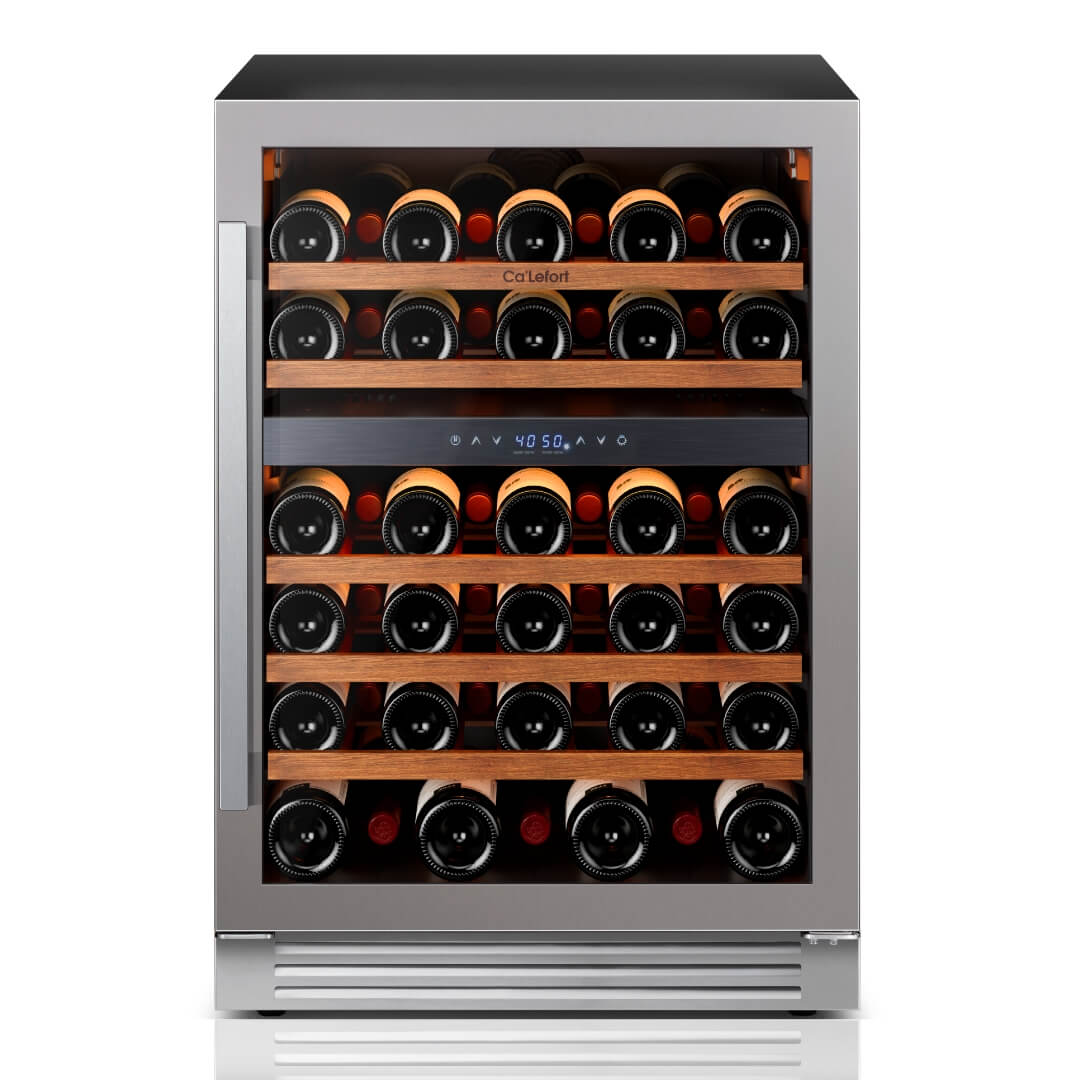
Ca'Lefort 24 inch Dual Zone Wine Fridge
How to Interpret the Results Without Overstating Them
A four-wine home tasting captures the preferences of a small group under the conditions of one evening. It can reveal which styles those guests responded to and where their preferences overlap, while still leaving room for a different group, setting, or bottle lineup to produce a different result.
Variation in tasting notes is part of the experience. Sensory sensitivity, attention, experience, and aroma memory differ from person to person, so one guest may notice something that another does not. Comparing those observations can be more interesting than trying to settle on a single correct description.
A Better Wine Game Night Helps Guests Understand Their Own Palates
A wine game night can be welcoming for newcomers while still giving experienced wine drinkers something meaningful to compare. When the bottles are chosen with purpose, served under reasonably consistent conditions, and assessed independently before discussion, concealing the labels gives everyone a little more room to pay attention to what is actually in the glass.
Brand and price recede for a moment, while aroma, acidity, tannin, body, and finish come forward. Guests can begin to see the difference between what they notice, what they enjoy, and how they evaluate the wine’s structure.
For Ca’Lefort, wine storage is part of a broader home experience. Stable storage, thoughtful preparation, efficient service, and natural sharing all contribute to how wine fits into everyday living.
The wine fridge and home bar work best in the background, supporting each pour while leaving the focus on the people around the table. When everything is organized and within reach, the host can spend less time managing the setup and more time being part of the evening.
Frequently Asked Questions
1. Can beginners and experienced wine drinkers join the same blind tasting?
Yes. Give everyone the same core categories, but allow the level of detail to vary. Beginners can describe what they smell and feel, while experienced participants may add possible explanations about grape variety, climate, or winemaking after recording their initial observations.
2. Does every guest need a separate glass for every wine?
No. For a tasting organized in two-wine rounds, two matching glasses per guest are generally sufficient for side-by-side comparison. Separate glasses for every wine are convenient because they preserve earlier samples, but they are not required for a well-run home tasting.
3. Should wine glasses be rinsed between samples?
Rinse a glass when visible residue or a persistent aroma from the previous wine could affect the next sample. Let it drain thoroughly afterward, since remaining water can dilute a small tasting pour. Clean, odor-free glassware matters more than making the process elaborate.
4. What supplies should be prepared besides wine and glasses?
Prepare bottle covers or opaque bags, numbered labels, scorecards, pens, drinking water, neutral bread or crackers, napkins, and a container for discarded wine. A measured pourer can also help keep serving volumes consistent. These simple tools reduce interruptions and allow guests to stay focused on the comparison.
5. Should wines be decanted before a blind tasting?
Decant when there is a specific reason, such as visible sediment or a wine that will benefit from additional air. Comparable wines should receive comparable treatment whenever possible so differences in oxygen exposure do not become another unnecessary variable.


