


Introduction
Thanksgiving dinner rarely calls for just one wine. You might have a red for the main course, a white for lighter dishes, and a sparkling bottle for the holiday toast. Each has its own storage needs and an ideal temperature for serving.
As you plan, you will likely come across two appliances that sound similar: an electric wine chiller and a wine fridge. Both manage wine temperature, but they serve different purposes. A chiller cools one or two bottles independently, making it convenient to prepare selected wines for serving. A wine fridge holds multiple bottles in a consistent environment, with organized storage and, in some models, separate temperature zones. If you're comparing capacities and configurations, Ca’Lefort's wine fridge collection offers options for different storage needs.
Understanding how these appliances work can make Thanksgiving preparations easier and help you manage wine storage and serving throughout the year.
What Is an Electric Wine Chiller?
How Does an Electric Wine Chiller Work?
An electric wine chiller is a compact appliance designed to cool one or a small number of bottles. A traditional ice bucket relies on direct contact between the bottle, ice, and water. An electric chiller uses a powered cooling system to regulate the temperature inside its chamber.
Ca’Lefort's Electric Wine Chiller uses thermoelectric cooling. An electrical current passes through a thermoelectric module, transferring heat from one side to the other. Heat is drawn away from the interior and released outside the unit, gradually lowering the temperature inside.
Because this approach does not use a conventional compressor, it suits compact appliances with independent temperature control. Users can select a target temperature through the digital control panel and monitor the displayed temperature as the unit operates.
Compared with a full-size wine fridge, an electric chiller offers dedicated temperature control for selected bottles without changing the conditions of a larger wine storage space.
When Is an Electric Wine Chiller Useful?
A chiller makes sense in several situations:
- Cooling one or two bottles: If you're serving only a bottle or two, a compact chiller may be sufficient for immediate serving needs.
- Easy access during meals: A compact chiller can sit near the dining or entertaining area, keeping selected bottles within reach.
- Independent temperature control: You can adjust the temperature of a particular bottle without changing the settings of your main wine fridge.
- Flexible placement: Some models are portable, making them suitable for different areas of the home or occasions away from your usual wine storage space.
The Ca’Lefort Electric Wine Chiller holds two bottles and has an adjustable temperature range of 46–65°F, a digital control panel, and a real-time temperature display.

Its 3.62-inch (92 mm) opening is designed to accommodate most standard wine bottles, along with many wider or unusually shaped bottles, including some sparkling wine bottles. Since bottle dimensions vary, check compatibility before using especially large or oversized bottles.
The chiller provides independent cooling for a small number of bottles rather than replacing a dedicated wine storage appliance.
One limitation to keep in mind is its minimum temperature of 46°F. Some sparkling wines and other styles are best served cooler than this, so an additional cooling method may be necessary.

Two-Bottle Wine Cooling
Ca'Lefort Electric Wine Chiller
Keep two bottles close at hand with adjustable cooling from 46–65°F. Touch controls and a real-time temperature display make settings easy to check, while warm amber lighting adds a refined touch to your wine-serving space. Includes an electric wine opener, two wine glasses, and serving accessories.
$319.99
Shop NowWhat Is a Wine Fridge and What Is It Designed For?
What Is the Main Purpose of a Wine Fridge?
A wine fridge provides a consistent, refrigerated environment for storing multiple bottles over time. It supports an ongoing collection, whether you keep a few favorite varieties or a broader selection.
Wine is sensitive to its surroundings. Temperature fluctuations, excessive light, and unnecessary vibration can affect how it develops in the bottle. A dedicated wine fridge accounts for temperature distribution, light protection, bottle positioning, and operational stability.
These considerations distinguish it from a conventional household refrigerator, which is designed for general food storage rather than the specific needs of wine.
How Do Single-Zone and Dual-Zone Wine Fridges Support Different Storage Needs?
Wine fridges generally come in two configurations: single-zone and dual-zone.
Single-Zone Wine Fridges
A single-zone wine fridge maintains one temperature setting throughout the compartment. It works well for households that primarily keep one style of wine or prefer a consistent environment for the entire collection.
If you do not need separate settings for different bottles, a single-zone model keeps temperature management straightforward.
Dual-Zone Wine Fridges
A dual-zone wine fridge has two independently controlled temperature compartments, making it useful for households with a mixed collection.
Reds and whites, for example, can be stored in separate zones, with each compartment adjusted according to the storage or serving requirements of the bottles inside.
The Ca’Lefort 24-inch Dual Zone Wine Fridge uses compressor-based cooling and offers an adjustable temperature range of 40–65°F across its two independently controlled zones. Its design also includes a double-glazed glass door and wooden wine shelves.
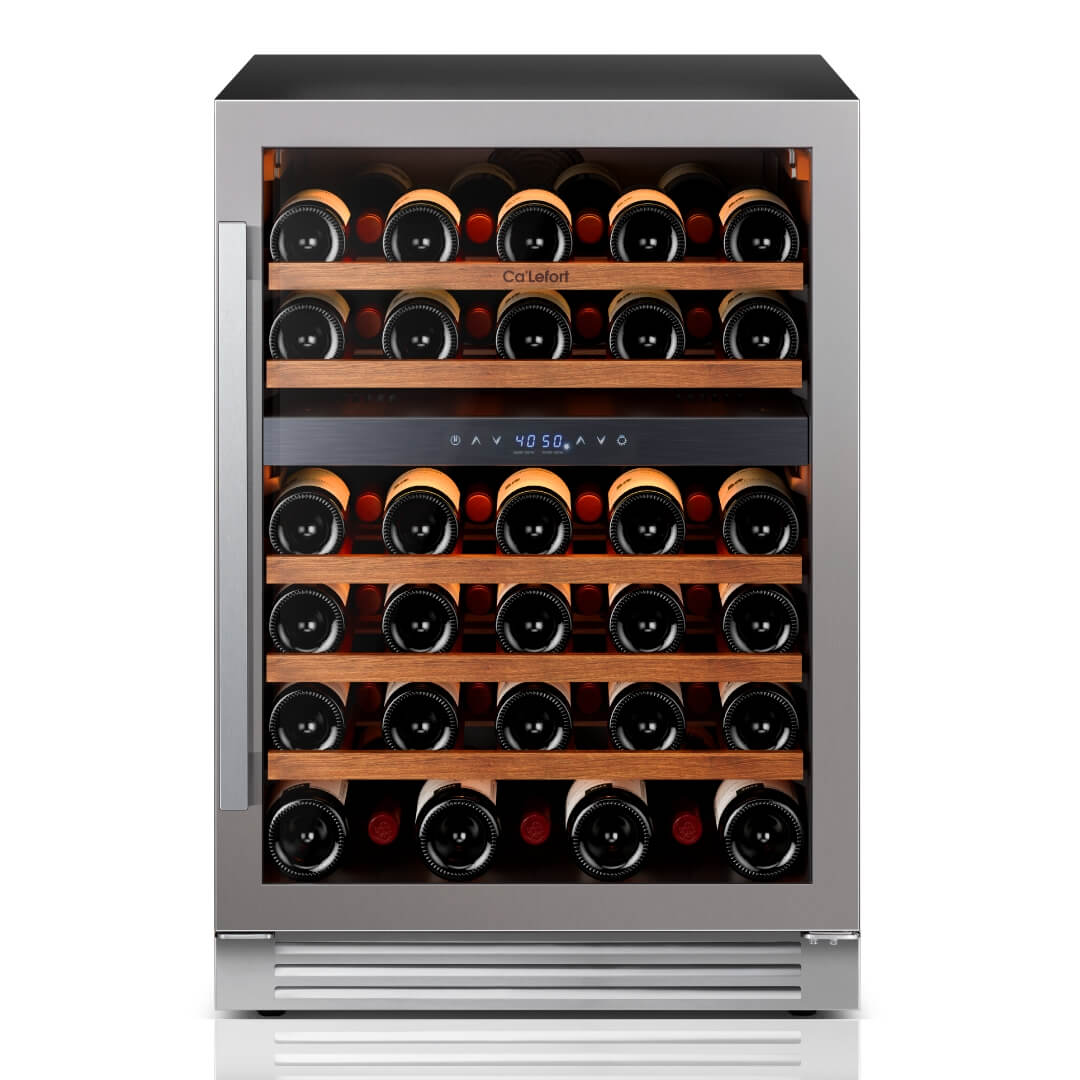
Dual-Zone Cooling
Ca'Lefort 24 inch Dual Zone Wine Fridge
Dual temperature zones store red and white wines at their ideal serving temperatures for everyday enjoyment and entertaining.
$869.99
Shop NowHow Does a Wine Fridge Support Long-Term Storage?
A wine fridge maintains a stable environment for bottles kept over weeks, months, or longer. Temperature consistency is particularly important for wines intended for extended storage.
WSET's guidance on wine storage and serving temperatures highlights several considerations: stable, relatively cool conditions, protection from light, appropriate bottle positioning, and minimal unnecessary vibration.
Bottle position also depends on the closure. Wines sealed with natural cork are generally stored horizontally to help keep the cork in contact with the wine. Screw-cap bottles do not have the same positioning requirements.
A wine fridge does not make every wine suitable for long-term aging. Aging potential depends on the wine's structure, quality, and production style. The appliance provides a suitable storage environment, but it cannot create aging potential that the wine does not already have.
Electric Wine Chiller vs. Wine Fridge: What Are the Key Differences?
A Side-by-Side Comparison
Both appliances manage wine temperature, but they are designed for different everyday needs.
| Comparison | Electric Wine Chiller | Wine Fridge |
|---|---|---|
| Primary Purpose | Independent cooling for a small number of bottles | Ongoing storage for multiple bottles |
| Typical Capacity | One or two bottles, depending on the model | Multiple bottles, from compact to large-capacity units |
| Temperature Management | Temperature control for a dedicated cooling chamber | Single-zone or dual-zone temperature management |
| Cooling Technology | Thermoelectric cooling in some models | Commonly compressor-based, although other designs exist |
| Main Use | Individual bottle cooling and convenient serving | Continuous storage and wine organization |
| Space Requirements | Generally compact, suitable for countertop or separate placement | Usually requires a more dedicated space |
| Wine Management | A small number of selected bottles | Multiple bottles and different wine varieties |
| Typical Users | Occasional wine drinkers and those seeking convenient bottle cooling | Wine enthusiasts, collectors, and households that regularly entertain |
The difference comes down to how you plan to use each appliance. A chiller handles independent temperature control for a few bottles. A wine fridge stores and organizes a larger collection in a more consistent environment.
Their functions can overlap. A wine fridge can hold bottles at temperatures suitable for short-term serving, while an electric wine chiller can maintain a selected temperature during use. Their primary purpose, capacity, and overall design are what set them apart.
Wine Storage Temperature vs. Serving Temperature: Why the Difference Matters
What Is the Difference Between Storage and Serving Temperature?
Storage and serving temperatures are often treated as interchangeable, even though they affect wine in different ways.
Storage temperature refers to the environment in which wine is kept over time. Serving temperature influences how its aromas, acidity, body, and flavors are perceived once it is poured into a glass. A bottle's storage temperature is not necessarily the temperature at which it should be served.
Storage Temperature: Consistency Matters Most
For wines kept over the long term, maintaining a stable temperature matters more than adjusting storage conditions for individual serving occasions.
WSET identifies approximately 50–59°F (10–15°C) as a reference range for long-term wine storage, emphasizing the importance of avoiding significant temperature fluctuations.
Excessive heat can accelerate a wine's development, while repeated, substantial temperature changes may affect its condition over time. This is one reason collectors often rely on a dedicated wine fridge rather than temporary cooling methods before each gathering.
Serving Temperature: Protecting the Wine's Intended Character
The right serving temperature depends on the style of wine. Temperature influences how different characteristics are perceived, from the freshness of a white wine to the structure of a red.
- Red wines: When served too cold, reds may taste more acidic or tannic, with a tighter structure. If served too warm, alcohol can become more noticeable and the wine may lose some of its freshness.
-
White wines: Chilling helps preserve freshness, but excessive cooling can make certain aromas and flavors less expressive.
- Sparkling wines: These generally benefit from thorough chilling, which supports a refreshing drinking experience and makes opening and pouring easier to manage.
WSET suggests serving fuller-bodied white wines, such as oak-aged Chardonnay, at approximately 50–55°F. Lighter-bodied whites are typically served cooler.
When white, rosé, or sparkling wines are chilled below approximately 43°F, some of their aromatic and flavor characteristics may become less noticeable.
Red wines also deserve a closer look at the familiar advice to serve them at "room temperature." That does not necessarily mean the 68–72°F commonly found in modern homes. WSET's guidance places many reds, particularly fuller-bodied styles, closer to 59–64°F for serving.
How Does This Affect Your Choice of Appliance?
Understanding the difference between storage and serving temperatures helps clarify where each appliance fits into your routine.
A wine fridge provides an ongoing storage environment, with single-zone or dual-zone settings to accommodate different wine styles. An electric wine chiller lets you manage the temperature of a selected bottle independently, based on when and how it will be served.
For example, a red wine stored in a wine fridge may benefit from a slight temperature adjustment before dinner. If the desired temperature falls within the chiller's operating range, you can use it for that bottle instead of changing the settings of the entire wine fridge.
Which Wine Cooling Option Makes More Sense for Thanksgiving?
Scenario 1: Preparing Multiple Bottles for a Family Dinner
For a Thanksgiving dinner involving several bottles, a wine fridge is generally the more practical choice for storage and preparation.
Suppose you're serving red wine with the main course, white wine with lighter dishes, and sparkling wine for a toast. You'll need enough room for the bottles, along with a way to manage their different temperature requirements.

A dual-zone wine fridge provides two independently controlled environments. Selected reds can remain in one zone while whites are stored in a cooler compartment, making it easier to organize the wines during the days leading up to dinner.
Keep in mind that a dual-zone fridge provides two temperature settings, not a separate setting for every variety. How well it accommodates your collection depends on the wines you're storing and the temperature range available in each zone.
Scenario 2: Keeping One or Two Bottles Ready to Serve
If you already have suitable wine storage and only want to prepare one or two bottles during dinner, an electric wine chiller is a convenient option.
For example, a red wine that would benefit from a slight temperature adjustment can be placed in the chiller with an appropriate target setting. Your main wine fridge remains undisturbed, with the other bottles kept at their usual storage temperatures.
This works particularly well for smaller gatherings or occasions when you're serving only a few wines. You can focus on the bottles you plan to open without adjusting your entire storage environment.
The target temperature must fall within the chiller's operating range. If a wine needs to be served below the unit's minimum setting, another cooling method will be necessary.
Scenario 3: Managing Everyday Wine Storage and Special Occasions
For households that enjoy wine regularly and often welcome friends or family, the two appliances can complement each other.
A wine fridge keeps the everyday collection organized in a consistent environment, while an electric wine chiller handles one or two selected bottles when a different serving temperature is needed.
During Thanksgiving, this arrangement adds flexibility. Your main collection can remain in place while individual bottles are prepared according to the meal and serving schedule.
The same approach works beyond the holidays, whether you're hosting a weekend dinner or simply opening a bottle at home.
Can an Electric Wine Chiller and a Wine Fridge Work Together?
A Complementary Approach to Wine Storage and Serving
An electric wine chiller and a wine fridge can work together as part of an established wine storage routine, with each handling a different stage of the process.
| Appliance | Everyday Role | Role During Special Occasions |
|---|---|---|
| Wine Fridge | Stores multiple bottles and maintains a consistent temperature environment | Organizes and prepares different wines ahead of a gathering |
| Electric Wine Chiller | Independently manages the temperature of selected bottles | Provides dedicated temperature control for one or two bottles |
For example, your everyday collection can remain in a dual-zone wine fridge. As Thanksgiving approaches, selected bottles can be moved into an electric wine chiller according to when you plan to serve them.
This keeps the broader collection in a consistent environment while giving you more flexibility with individual bottles.
Not every household needs both appliances. If you drink wine occasionally and typically serve only one or two bottles, an electric wine chiller may be sufficient for immediate serving, provided you have suitable storage for any bottles you keep. If you maintain a larger collection or regularly store different wine styles, a dedicated wine fridge will likely be the more useful choice.
Conclusion
An electric wine chiller and a wine fridge both help manage wine temperature, but they serve different purposes. A chiller provides independent cooling for a small number of bottles, while a wine fridge supports the ongoing storage and organization of a larger collection.
For households that enjoy wine regularly or often entertain, the two appliances can also work together, allowing everyday storage and individual serving needs to be managed separately.
Thanksgiving offers a good opportunity to consider how wine fits into your hosting routine, but the same principles apply throughout the year. Think about the size of your collection, the wines you typically enjoy, and how often you serve them. These everyday habits will help you decide which appliance makes the most sense for your home.
Frequently Asked Questions
1. How Long Does an Electric Wine Chiller Take to Cool a Bottle?
Cooling time depends on the wine's starting temperature, bottle size, room conditions, and target temperature. A bottle starting at room temperature will generally take longer to cool than one that has already been refrigerated.
An electric wine chiller does not cool wine instantly. It gradually brings the cooling chamber toward the selected temperature, while the bottle itself needs time to cool. Allow sufficient time before serving.
2. Can Champagne Bottles Fit in a Standard Wine Fridge?
Not always. Champagne bottles are often wider, and sometimes taller, than standard Bordeaux-style bottles. Their size can make them difficult to fit between shelves and reduce the fridge's usable capacity.
Before storing larger sparkling wine bottles, check the shelf spacing, interior depth, and bottle clearance. Some wine fridges have adjustable shelving that helps accommodate different bottle shapes. Since advertised capacities are generally based on standard bottle dimensions, the actual number of bottles you can store may vary.
3. Can You Store Opened Wine in a Wine Fridge?
Yes. Opened wine can be kept in a wine fridge for short-term storage as long as the bottle is properly resealed. Keeping it upright helps prevent spills and can reduce the surface area of wine exposed to air, while a proper closure helps limit further oxygen exposure.
Refrigeration slows the chemical reactions associated with oxidation, but wine will still change after opening. How long it remains enjoyable depends on its style, age, initial condition, and how well it is sealed.
For sparkling wine, use a dedicated sparkling wine stopper to help preserve carbonation. Whatever the style, it's best to enjoy opened wine while its aromas and flavors remain fresh.
4. How Often Should You Clean a Wine Fridge?
Clean your wine fridge periodically, and sooner if a spill occurs. The frequency depends on how often you use it.
Before cleaning, remove the bottles and disconnect the appliance from its power source. Wipe removable shelves and interior surfaces with a soft cloth and a mild cleaning solution, following the manufacturer's instructions.
Avoid abrasive cleaners, harsh chemicals, and excessive water around electrical components. Make sure all surfaces are completely dry before returning the bottles and restarting the appliance.


