

- Traditional wine cellars rely on architectural conditions to provide stable, dark, high-capacity storage and remain well suited for long-term aging and large collections.
- Modern wine fridges bring controlled storage into kitchens, dining rooms, and home bars, making them a natural fit for contemporary homes and everyday use.
- When choosing a wine fridge, consider its storage purpose, actual capacity, compatible bottle formats, temperature-zone needs, and installation conditions rather than focusing only on appearance or advertised bottle count.
- Wine cellars and wine fridges are not simple substitutes for one another. The right solution depends on collection size, usage frequency, and available household space.
Introduction
In the traditional image of wine storage, the cellar sits beneath the home, with stone walls, wooden racks, low lighting, and bottles organized by region and vintage. It serves two purposes at once: providing storage and reflecting the scale and character of the collection itself.
Wine storage, however, did not remain confined to the cellar.
As homes and drinking habits changed, storage needs shifted as well. Instead of building a dedicated room for a large collection, many homeowners began looking for a stable and accessible environment within the spaces they already use every day. The modern wine fridge emerged from that transition.
This shift also helps explain why wine fridges have become part of the modern home rather than remaining associated only with dedicated wine rooms.
A wine fridge is best understood as its own category. It translates the environmental control once achieved through architecture into a dedicated appliance that can fit into a kitchen, dining room, or home bar. It is neither a smaller cellar nor a standard refrigerator with a few added racks.
The evolution of wine storage reflects not only how people collect wine, but also how they live at home.
Why Traditional Wine Cellars Have Endured
A wine cellar is more than a room for holding bottles. Its value comes from the way the built environment can create relatively stable conditions for long-term storage.

Underground Spaces Provide Natural Temperature Buffering
Underground spaces are less directly affected by sunlight, outdoor temperature changes, and the day-to-day heating fluctuations that influence rooms above ground. Soil, stone, brick, and concrete have substantial thermal mass, which helps slow the rate of temperature change.
This does not mean that a cellar maintains one exact temperature at all times. Instead, it generally warms and cools more gradually. For wine stored over several years, slow and limited changes are typically more suitable than repeated short-term swings between warmer and colder conditions.
Wine storage is not about making bottles as cold as possible. It is about maintaining stability over time.
Darkness Reduces Light Exposure
Underground cellars typically have few or no large windows and use limited direct lighting. Lower light levels help reduce prolonged exposure to ultraviolet radiation and strong visible light.
Dark glass bottles offer some protection, but they do not block all light. For a collection intended to age, limiting light exposure remains an important part of the storage environment.
Dedicated Space Supports Collection Management at Scale
Capacity is another important advantage of a traditional cellar. Collectors can organize hundreds or even thousands of bottles by region, grape variety, vintage, drinking window, and purchase batch.
A collection of this size requires more than racks. It also needs a clear system that identifies which bottles are ready to drink, which are still aging, and which should be inspected or opened soon. A cellar therefore performs two roles: environmental control and collection management.
The same qualities that make a cellar effective also create practical limitations. Not every household has sufficient space, the budget for construction, or the resources needed for ongoing temperature and humidity management.
What Changed Was Not Wine, but Homes and Drinking Habits
Traditional wine cellars have not lost their value. What has changed is the amount and type of space available in modern homes, along with the role wine plays in everyday life.
Modern Homes Place Greater Emphasis on Multipurpose Space
Many homes today no longer reserve large rooms for a single purpose. The boundaries between kitchens, dining rooms, and living areas have become less defined, while home bars, sideboards, and entertaining areas are often incorporated into open-plan spaces.
Within this type of layout, building a separate underground room for wine may not be realistic. Homeowners increasingly need storage that fits within an existing footprint and complements the surrounding design.
Wine storage has therefore shifted from planning a dedicated room to planning a dedicated appliance.
Collection Sizes Have Become More Varied
Dedicated wine storage was once closely associated with large collections. Today, household needs are far more varied.
Some people keep several dozen age-worthy bottles for long-term storage. Others want a selection available for dinners, holidays, or weekends with friends. Some buy wine regularly and rotate through their bottles quickly, without needing a full-scale cellar.
Bottle count alone no longer determines whether dedicated storage makes sense. Storage duration, wine style, and how frequently bottles are opened also shape the right solution.
Wine Has Moved From a Collectible Into Everyday Life
Wine was once commonly stored away from the main living areas, and retrieving a bottle from the cellar often carried a sense of occasion. Today, wine is more frequently part of family dinners, gatherings with friends, holiday entertaining, and quiet weekends at home.
A storage system must therefore do more than protect wine. It should also make bottles intended for near-term drinking easy to access when they are needed.

When storage is too far removed from the place where wine is served, soon-to-be-consumed bottles often end up in the kitchen refrigerator. The more practical goal is not to choose between dedicated storage and everyday convenience, but to create a thoughtful balance between the two.
That balance begins with understanding how to store wine properly at home, including the differences between short-term chilling, everyday storage, and longer-term collection management.
What Modern Wine Fridges Changed
The significance of the wine fridge lies not in placing a smaller cellar inside the kitchen, but in shifting wine storage from architectural conditions to dedicated equipment.

From Passive Conditions to Active Control
Traditional cellars rely on underground placement, wall construction, and local climate to establish their basic environment. Modern wine fridges use refrigeration systems, sensors, internal air circulation, and insulation to manage temperature actively.
The distinction begins with purpose. The U.S. Food and Drug Administration recommends keeping household refrigerators at 40°F or below for food safety, while dedicated wine storage is designed around the controlled conditions required by bottled wine.
As a result, controlled wine storage no longer requires a basement. Even in warm climates, or in kitchens affected by air conditioning, cooking heat, and seasonal temperature changes, a wine fridge can maintain a relatively independent environment.
Research from UC Davis has also shown that warmer storage temperatures can produce more noticeable chemical and sensory changes in wine. This reinforces why temperature management matters beyond simply keeping bottles cool.
From a Separate Room to Part of the Home System
Modern wine fridges are often planned alongside cabinetry, kitchen islands, sideboards, or home bars. Their appearance, door swing, ventilation method, and installation dimensions all influence whether the appliance truly fits the space.
Wine storage has therefore moved from a back-of-house function to a considered element of home design.
In a well-planned home, a wine fridge should not simply occupy whatever empty space happens to be available. Its location should reflect where people select bottles, open wine, prepare glassware, dine, and entertain.
Wine Cellars and Wine Fridges Are Not Simple Replacements for One Another
Framing wine cellars and wine fridges as simply traditional and modern versions of the same solution overlooks the fact that they do not always serve the same storage needs.
| Comparison Factor | Traditional Wine Cellar | Modern Wine Fridge |
|---|---|---|
| Space Format | Dedicated room or underground area | Freestanding, built-in, or fully integrated into cabinetry |
| How the Environment Is Created | A combination of architectural conditions and mechanical systems | Active control through dedicated equipment |
| Capacity | Best suited to large-scale collections | Available in sizes ranging from compact units to full-height cabinets |
| Installation Complexity | May involve insulation, moisture control, refrigeration, and construction work | Primarily requires attention to dimensions, ventilation, and electrical access |
| Everyday Accessibility | May be located some distance from the main living areas | Can be integrated directly into the kitchen, dining room, or home bar |
| Best Suited For | Large collectors and custom residential projects | Everyday wine drinkers, home collectors, and homeowners upgrading their space |
For owners of large, high-value collections who plan to age wine over the long term and have dedicated space available, a professionally designed cellar remains difficult to replace. It can offer greater capacity, more complete zoning, and stronger display and inventory-management capabilities.
For many modern households, however, a wine fridge is the more practical choice. It can create an environment better suited to wine than a kitchen refrigerator without requiring major architectural renovation.
A combined approach can also work well. A cellar can hold long-term and high-value bottles, while a wine fridge in the kitchen or home bar keeps near-term selections accessible. This protects the core collection while reducing the need to enter the main cellar frequently.
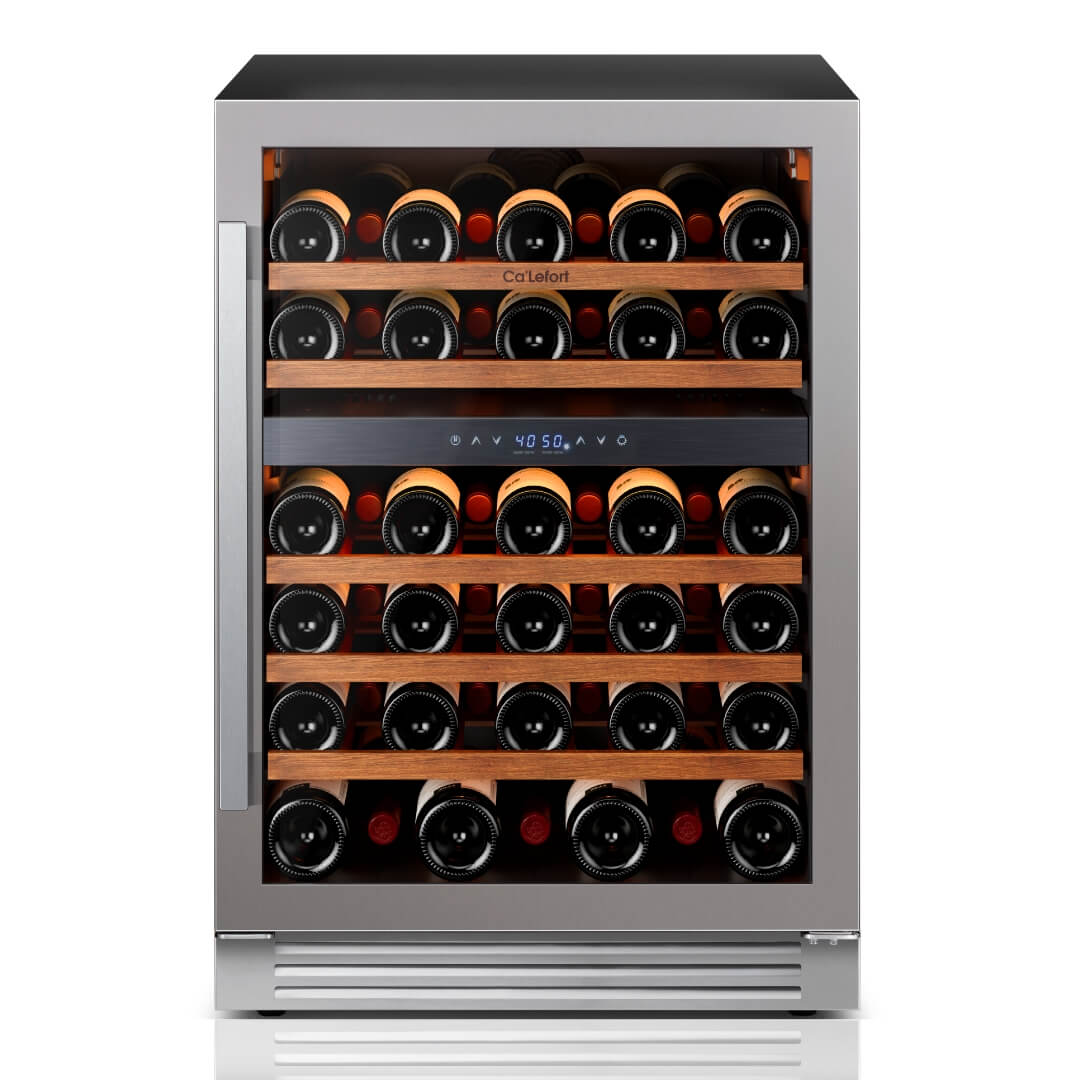
Ca'Lefort 24 inch Dual Zone Wine Fridge
Modern Households Should Define the Storage Task Before Choosing an Appliance
When choosing a wine fridge, homeowners should consider storage purpose, required capacity, wine selection, frequency of use, and installation conditions together rather than evaluating any single factor on its own.
Capacity determines whether a unit can accommodate an existing collection while leaving reasonable room for future purchases, making it an important factor to consider before buying. Advertised bottle count should not be treated as the only measure, however. Actual capacity also depends on bottle formats, collection turnover, and future buying plans.

Homeowners should also consider whether the appliance will mainly hold wine for near-term drinking, longer-term storage, or a mix of red, white, and sparkling wines. These different storage tasks can influence the number of temperature zones, rack design, installation type, and environmental-control requirements.
Single-Zone and Dual-Zone Models Address Different Management Needs
A single-zone wine fridge maintains one relatively consistent internal environment. It is suitable for people who mainly store one category of wine or use the appliance primarily for longer-term storage.
A dual-zone wine fridge may be better suited to households storing red, white, and sparkling wines at the same time. Its value extends beyond offering two temperature settings. It also helps accommodate different storage and serving needs.
A closer comparison of single-zone and dual-zone wine fridges can help homeowners decide whether one consistent environment or two independently managed sections better suit their collection.
A dual-zone system does not mean that every bottle will be ready to serve immediately. Some wines may still require decanting, additional chilling, or a brief period of warming before drinking.
Installation Type Determines Whether the Appliance Can Operate Reliably
Freestanding, built-in, and panel-ready wine fridges each have different installation requirements.
Built-in models typically ventilate through the front and are designed to fit within a prepared cabinet opening. Enclosing a freestanding model inside cabinetry may restrict airflow and reduce cooling performance. Panel-ready models also require advance planning for door-panel dimensions, hinge structure, and overall weight.
The relationship between the appliance and the surrounding space is therefore not only a matter of appearance. It also affects operating conditions and long-term reliability.
Conclusion
The evolution of wine storage does not mean that modern households care less about wine. In fact, it suggests that more people are thinking carefully about how wine should be stored, managed, and enjoyed.
Traditional wine cellars are built around dedicated architectural space and remain well suited to large, long-term, and systematically managed collections. Modern wine fridges bring controlled storage into kitchens, dining rooms, and home bars, making proper wine storage accessible beyond large residential properties.
Frequently Asked Questions
1. Can a wine fridge store water, soda, or other beverages?
Yes, provided that the appliance’s temperature range and shelving layout are suitable for the beverages being stored. Some wine fridges operate at warmer temperatures than dedicated beverage coolers, so they may not chill water, sparkling water, or soft drinks as cold as some users prefer.
2. Can a wine fridge be used as a regular refrigerator for food?
A wine fridge should not generally be used for perishable food unless it can consistently maintain 40°F (4°C) or below. Many wine-storage settings are warmer than standard food-refrigeration temperatures, so the appliance specifications should be checked before it is used for food.
3. Do curling or moldy labels mean the wine has spoiled?
Not necessarily. Label damage is often related to humidity, adhesive quality, and storage duration, and it does not by itself indicate that the wine has spoiled. Persistent moisture, water on the bottle, or leakage around the cork should prompt a closer inspection of both the appliance and the bottle seal.
4. Does every bottle of wine need to be stored horizontally?
The main reason for storing wine horizontally is to keep the wine in contact with a natural cork. This helps the cork retain moisture and elasticity, reducing the risk of shrinkage, seal failure, and unwanted air entering the bottle during long-term storage.
Horizontal storage also uses rack space efficiently and makes collections easier to organize. For bottles sealed with screw caps, glass closures, or some synthetic corks, orientation is generally less important.
5. Does UV-resistant glass mean a wine fridge can be placed in direct sunlight?
No. UV-resistant glass can reduce some light exposure, but it does not eliminate heat gain or the effects of prolonged light exposure. A wine fridge should still be kept away from continuous direct sunlight to limit cabinet heating and the workload placed on the refrigeration system.


