

💡 Key Takeaways
- Single-Zone Wine Fridge: Simple, practical, and usually more budget-friendly. It works best if you mostly collect one type of wine, like reds or whites. It’s easy to use, easy to maintain, and a good option for smaller spaces or beginner collectors.
- Dual-Zone Wine Fridge: A dual-zone fridge has two separate temperature zones, so you can store reds and whites in the same unit at different temperatures. It’s a better fit for mixed collections, home bars, or anyone who wants more flexibility.
- The Verdict: If you mostly store one type of wine, a single-zone fridge should be enough. If you keep both reds and whites, a dual-zone fridge is the better long-term choice.
Introduction
Temperature has a big effect on how wine tastes and ages. Red and white wines usually do better at different temperatures, so storing them the right way can help keep their flavor and quality.
Choosing between a single-zone and dual-zone wine fridge might seem like a small detail, but it can make a difference, especially if you have more than one type of wine. This guide breaks down both options so you can choose the one that fits your collection and your home.

What Is a Single-Zone Wine Fridge?
A single-zone wine fridge has one temperature setting for the whole cabinet. That means every bottle inside is stored at the same temperature.
Advantages
- More affordable: A good option for beginners or smaller collections.
- Easy to use: You only need to set one temperature.
- Good for one type of wine: Works well if you mainly store reds or whites.
Limitations
- Not ideal for mixed storage: Reds and whites usually need different temperatures.
- Less flexible: You can’t set separate zones for different wine types.
Suitable Scenarios
- Small home bars with one main type of wine.
- Beginner collectors who want simple storage.
- Homes with limited space for a wine fridge.

Ca'Lefort 24 inch Wine Cooler
What Is a Dual-Zone Wine Fridge?
A dual-zone wine fridge has two separate temperature zones. This lets you store different wines at different temperatures in the same unit.
Advantages
- Separate control for different wines: Helps reds and whites stay at better temperatures.
- More flexible: Great for mixed collections.
- Better storage conditions: Helps protect wine flavor and quality.
Limitations
- Higher cost: Usually more expensive than a single-zone fridge.
- Larger size: May need more space.
- Slightly higher energy use: Because it manages two zones instead of one.
Suitable Scenarios
- Home bars or small cellars with both red and white wines.
- Collectors who want more control over storage and serving temperatures.
- Homes that often host dinners or gatherings.

Single-Zone vs. Dual-Zone Wine Fridge Comparison
| Comparison Factor | Single-Zone Wine Fridge | Dual-Zone Wine Fridge |
| Temperature Control | One temperature for the whole cabinet | Two separate temperature zones |
| Red & White Storage | Better for one main wine type | Can store reds and whites at different temperatures |
| Flexibility | Limited | More flexible for mixed collections |
| Price | More affordable | Usually higher |
| Size | Often more compact | Usually larger |
| Energy Consumption | Generally lower | Slightly higher |
| Best For | Beginners, smaller spaces, single-type collections | Mixed collections, home bars, frequent hosting |
Why These Differences Matter
- Temperature control: A single-zone fridge keeps everything at one temperature, while a dual-zone fridge lets you set different temperatures for different wines.
- Wine quality: Storing wine at the right temperature helps protect its flavor and overall quality.
- Flexibility: A dual-zone fridge gives you more room to grow if your collection includes different wine styles.
Why Many Collectors Prefer Dual-Zone Fridges
For many wine collectors, consistency matters. Red and white wines often need different temperatures, and a dual-zone fridge makes it easier to store both in one unit.
This is helpful if you have a home bar, entertain often, or like keeping different bottles ready for different occasions. Instead of adjusting one temperature for everything, you can give each section its own setting.
Example Use Cases
- Mixed red and white wine collections.
- Home bars or small wine cellars.
- Dinner parties, gatherings, or everyday wine enjoyment.
Key Insight:
Dual-zone fridges offer more flexibility for mixed collections, while single-zone fridges are simpler and more affordable for one main type of wine.
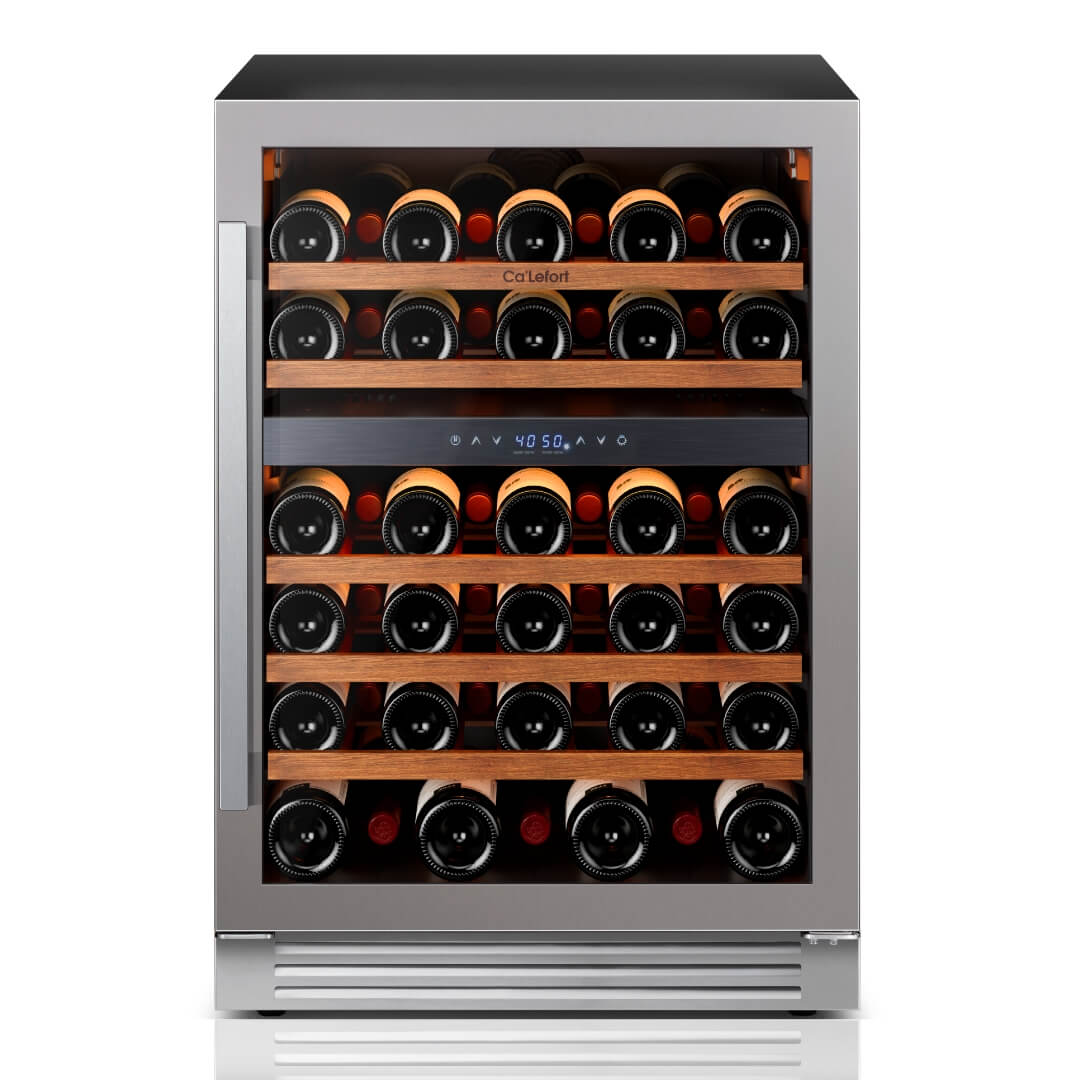
Ca'Lefort 24 inch Dual Zone Wine Fridge
Common Misconceptions
- “Single-zone is always enough.”
Not always. If you store both reds and whites, one temperature may not work well for every bottle.
- “Dual-zone fridges use too much electricity.”
They may use slightly more energy, but for mixed collections, the extra flexibility can be worth it.
- “As long as the temperature is stable, size doesn’t matter.”
Size still matters. Capacity, layout, and access all affect how easy the fridge is to use.

Real-World Scenarios: Which One Should You Choose?
Go With a Single-Zone Wine Fridge If
You mostly store one type of wine and don’t need different temperatures in the same unit. It’s a simple, budget-friendly option that works well for smaller collections.
If your collection is mostly reds or mostly whites, a single-zone fridge can give you steady storage without making things complicated.
A Dual-Zone Wine Fridge Makes Sense If
Your collection includes both reds and whites, and you want to store them at different temperatures in the same cabinet. It’s also a good choice if you host often and want different bottles ready for different meals or occasions.
For home bars, dining spaces, or kitchens, dual-zone storage gives you more flexibility and makes the fridge easier to use day to day.
Final Verdict: Single-Zone vs. Dual-Zone Wine Fridges
Choosing between a single-zone and dual-zone wine fridge is really about your collection. If your wine choices are simple, a single-zone fridge may be enough. If you keep different types of wine, a dual-zone fridge gives you more control.
Single-Zone Wine Fridge
Best for people who mostly store either reds or whites. It has one temperature zone, so it’s simple to use and usually more affordable.
Dual-Zone Wine Fridge
Best for collections with both reds and whites. Two separate zones make it easier to store different wines at the right temperatures and keep them ready for the right moment.
Frequently Asked Questions
Is a single-zone fridge suitable for long-term storage of aged wine?
Yes, if the wines you’re storing have similar temperature needs. But if you want to store reds, whites, and sparkling wines together, a single-zone fridge may not be flexible enough.
Can a dual-zone fridge store Champagne or sparkling wine?
Yes. Champagne and sparkling wine can usually go in the cooler zone, while red wine can stay in the warmer zone.
Can a wine fridge be used as a regular refrigerator?
Not really. Wine fridges are made for wine storage, not regular food storage. They usually run at higher temperatures than standard refrigerators, so they may not keep food fresh the same way.
How should I clean and maintain my wine fridge?
Clean your wine fridge every 3 to 6 months. Wipe the shelves, glass door, and interior with a mild cleaner. Turn off the power before cleaning, and avoid getting water near electrical parts. Regular cleaning helps the fridge run well and keeps your wine stored properly.


