

💡 Key Takeaways
- Dry aging concentrates beef flavor and creates a more steakhouse-style texture.
- Wet aging focuses more on tenderness, while dry aging develops deeper flavor over time.
- 30–45 days is the range many steak lovers associate with classic dry aged steak flavor.
- Standard refrigerators often struggle to maintain the stable airflow and humidity needed for proper dry aging.
- More home cooks are getting into dry aging as backyard BBQ and premium home cooking continue growing.
- At its core, dry aging is about flavor, not just technique.
The first time most people try a properly dry-aged steak, the reaction is usually the same.
The flavor feels deeper. Richer. More concentrated.
It does not taste like the usual steak you pick up from the grocery store. The texture is different too. It is tender, but it also has more character. Some cuts develop subtle buttery notes, others lean slightly nutty or earthy. That signature steakhouse flavor people talk about often comes from dry aging.
For years, that experience mostly belonged to high-end steakhouses and professional kitchens. Now, more serious home cooks are getting into dry aging themselves.

Part of that comes from the way home cooking has changed. Backyard BBQ setups are more advanced. Smokers, premium grills, pizza ovens, and outdoor kitchens are more common. People are also paying more attention to steak quality instead of simply buying whatever is available at the supermarket.
Dry aging fits naturally into that world. It is not about showing off equipment. It is about getting better flavor at home.
What Makes Dry Aged Steak Taste Different?
A lot of people assume dry aging is mainly about tenderness. That is only part of the story.
The real reason steak lovers care about dry aging is flavor.
As beef ages, it slowly loses moisture. As water content decreases, the beef flavor becomes more concentrated. It is a little like reducing the sauce on the stove. The more it reduces, the deeper and more focused the flavor becomes.
At the same time, natural enzymes inside the meat begin breaking down muscle tissue. This helps the steak become more tender without making it feel soft or mushy.

The biggest difference, though, is the overall character of the steak.
A properly dry-aged ribeye or strip steak can taste:
- Nutty
- Buttery
- Rich
- Earthy
- Steakhouse-style
That depth is difficult to replicate with standard fresh beef.
Not everyone loves a heavily aged steak, especially after longer aging periods. But for many steak fans, the difference is easy to notice once they try it.
Dry Aging vs. Wet Aging
Wet aging is much more common in the grocery industry because it is easier and more affordable to manage.
In wet aging, beef stays inside vacuum-sealed plastic packaging while it ages under refrigeration. The process still improves tenderness, though the flavor remains closer to fresh beef.
Dry aging works differently. The meat is exposed to controlled airflow, temperature, and humidity over time. Moisture slowly evaporates while flavor becomes more concentrated.
That is why dry-aged steak often tastes closer to what people expect from a premium steakhouse.
Wet aged steak tends to taste cleaner and fresher. Dry aged steak develops a deeper, more mature flavor profile.
Neither method is right or wrong. They simply create different results.
For casual steak dinners, wet aging works perfectly well. For people who want more complexity, stronger beef flavor, and a more elevated steak experience, dry aging becomes more appealing.
Why More Home Cooks Are Getting Into Dry Aging
Dry aging used to feel intimidating for home cooks. Most people associated it with restaurant kitchens or professional butchers.
That has changed quite a bit.
Backyard cooking culture has grown quickly in the United States, especially among people investing in:
- Premium grills
- Offset smokers
- Outdoor kitchens
- Pizza ovens
- Cast iron cooking setups
Once someone starts paying closer attention to steak quality and cooking techniques, dry aging often becomes the next step naturally.
Many home cooks are no longer just trying to copy restaurant meals. They want better ingredients, more control, and a more rewarding cooking experience at home.
Dry aged steak delivers exactly that.
It also fits extremely well into entertaining. A dry aged tomahawk or ribeye becomes the centerpiece of the evening in a way standard supermarket steak usually does not.
For many people, the process itself becomes part of the enjoyment. Selecting the cut, watching it age, trimming it properly, and finally cooking it all together makes the meal feel more intentional.
Why Proper Temperature and Humidity Matter
One of the biggest misconceptions about dry aging is the idea that any refrigerator can do the job.
Technically, beef can sit inside a refrigerator for a while. That does not mean it is dry aging properly.
Successful dry aging depends heavily on environmental stability.
Temperature needs to remain consistent. Humidity needs to stay controlled. Airflow matters too, because stagnant air can create uneven aging conditions.

A standard kitchen refrigerator struggles with all three.
Most household refrigerators experience frequent temperature changes because the doors open throughout the day. They are also designed for general food storage, not long-term beef aging.
That creates problems like:
- Unstable humidity
- Poor airflow
- Odor contamination
- Inconsistent aging conditions
Over time, those conditions can affect both flavor development and overall aging consistency.
Why More Home Cooks Are Using Dedicated Dry Age Fridges
More steak enthusiasts are starting to use dedicated dry-age fridges for one simple reason: consistency.
Dedicated dry aging cabinets are designed specifically around those conditions instead of general food storage, which is why more serious home cooks are investing in dry age fridges for home use when they want more consistent long-term aging results.
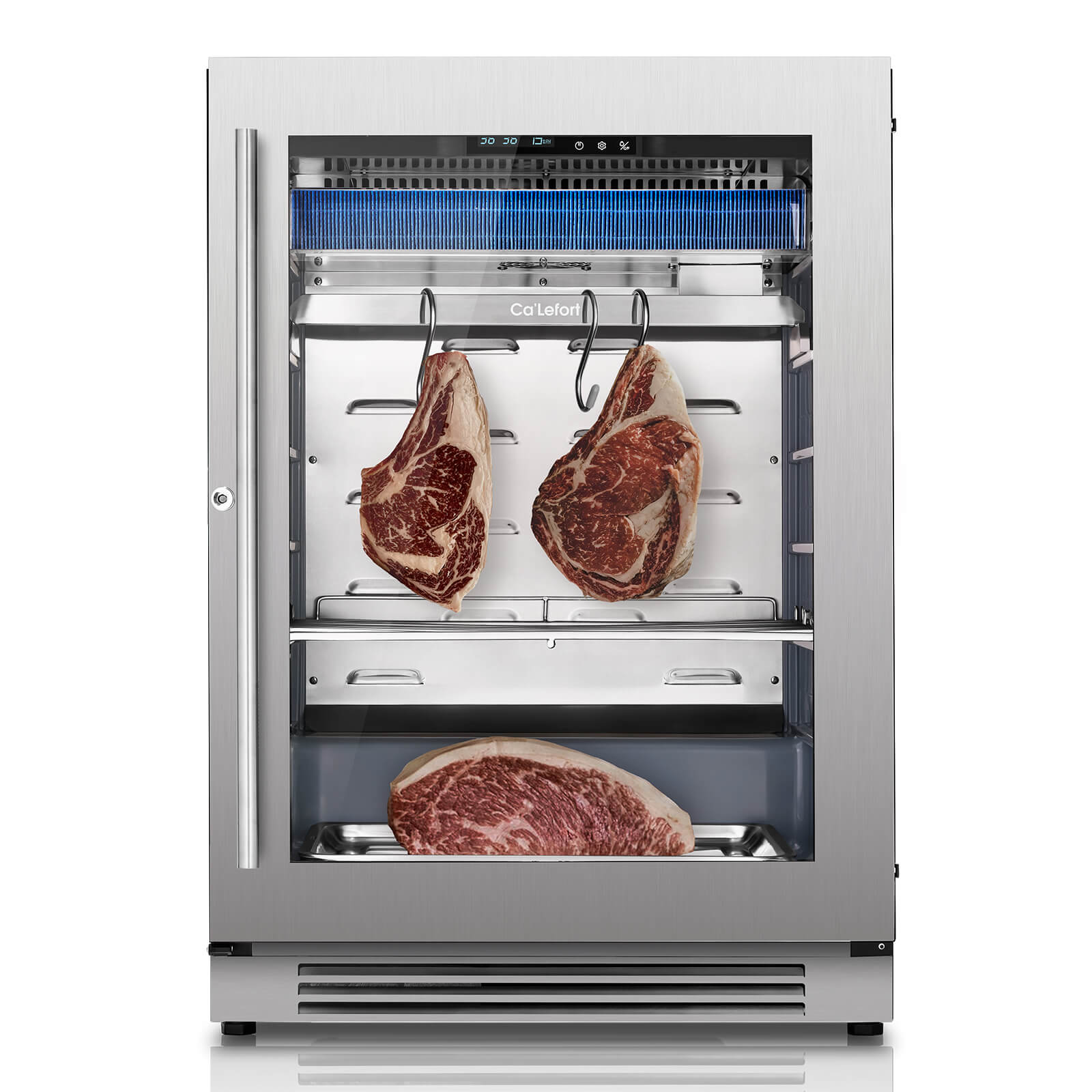
Dry Age Fridge VI60SA
Compared to a standard refrigerator, a proper dry age fridge usually provides:
- More stable temperature control
- Better airflow circulation
- A cleaner aging environment
- More reliable humidity management
For many steak lovers, the goal is not making dry aging feel more “complicated or professional.”
It is about creating a more reliable way to get the deeper flavor and steakhouse-style texture that make dry-aged beef so appealing.
That consistency becomes especially important once people start aging larger cuts for 30 days or longer. At that point, environmental stability plays a major role in how the final steak develops in both flavor and texture.
How Long Should You Dry Age Steak at Home?
The ideal aging time depends on personal preference.
Some people enjoy lighter aging with subtle flavor changes. Others want the intense steakhouse character that develops over longer periods.
14–21 Days
This is usually when the first noticeable changes begin.
The beef becomes slightly more concentrated, while the texture softens noticeably. For beginners, this range is often the easiest place to start.
30–45 Days
This is where classic steakhouse-style dry aging becomes much more recognizable.
The flavor deepens significantly, and the steak develops more complexity. Many steak enthusiasts consider this the sweet spot between tenderness and stronger dry-aged flavor.
60+ Days
Longer aging periods create much more concentrated flavor.
Some steak lovers enjoy the bold, almost funky character that develops at this stage. Others find it too intense.
At that point, it becomes a matter of preference.
Is Dry Aging at Home Actually Worth It?
For people who only cook steak occasionally, probably not.
For serious steak lovers, the answer is usually yes.
Dry aging changes more than the meat itself. It changes the entire cooking experience.
There is more anticipation involved. More preparation. More attention to detail.
And once people successfully cook a properly dry aged steak at home, many find it hard to go back to standard grocery store steak.
The flavor difference becomes very noticeable.
That does not mean every steak needs to be dry aged. Fresh steak still has its place. Wet aged steak absolutely has its place too.
Dry aging simply creates a different experience, one that many home cooks become interested in once they understand what it brings to the table.
Final Thoughts
Dry aging is not really about turning your kitchen into a steakhouse.
It is about flavor, process, and the kind of cooking experience many serious home cooks eventually start looking for.
A properly dry aged steak feels more intentional from beginning to end, especially when paired with the right wine and a well-designed home entertaining setup.
That is why more steak enthusiasts are bringing dry aging into their own kitchens and outdoor cooking setups.
Not because it feels trendy.
Because the flavor speaks for itself.
A Few Quick Answers
1. Does dry aging make steak more tender or just more flavorful?
It does both, though flavor is usually the bigger difference people notice first. The texture gradually softens over time, while the beef flavor becomes more concentrated as moisture slowly evaporates.
2. Is dry aging only for professional chefs and steakhouses?
Not anymore. More home cooks are getting into dry aging as premium home cooking and backyard BBQ setups continue growing. Dedicated dry aging cabinets have also made the process more approachable for serious steak enthusiasts.
3. What humidity is best for dry aging steak?
Most dry aging setups operate around 75–85% relative humidity to help balance moisture loss and surface protection during aging.
4. How much meat weight is lost during dry aging?
Some weight loss is normal during dry aging because moisture gradually evaporates over time. Longer aging periods usually lead to greater loss.
5. Can you dry age steak in a regular refrigerator?
For short periods, some people attempt dry aging in a regular refrigerator. The challenge is consistency. Standard kitchen refrigerators experience regular temperature and humidity changes from daily use, which makes long-term dry aging more difficult to manage reliably.
6. What temperature is best for dry aging steak?
Most dry aging setups stay close to 34–38°F. The goal is to maintain a stable environment rather than pushing the temperature extremely low.


